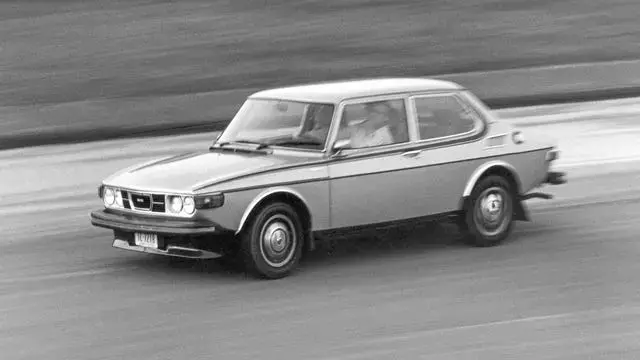
The Evolution of the 1976 Saab 99EMS: From Underdog to Rally Champion
In August 1976, an automotive review documented the impressive journey of the Saab 99EMS, a vehicle that had historically struggled to capture widespread appeal due to its peculiar design and initial performance shortcomings. This comprehensive analysis showcases how Saab meticulously re-engineered the 99EMS, transforming it from an overlooked oddity into a sophisticated sporting sedan. The narrative particularly emphasizes the vehicle's enhanced engine power, improved handling dynamics, and responsive steering, attributes that were meticulously refined through rigorous rally racing programs. This dedication to development not only elevated the 99EMS's status but also solidified Saab's reputation for engineering ingenuity, proving that even a car with an unconventional past could achieve significant acclaim and performance excellence.
Reflecting on the Saab 99's initial reception, many found its design unconventional, even peculiar. However, this distinct aesthetic soon transitioned from strange to accepted, as the vehicle began to carve its own niche. The author's personal fascination with the Saab started with an early 99 model, admiring its aviation-inspired cockpit, glowing instrument panel, and unique interior layout, a testament to Saab's roots in aircraft manufacturing. Despite these interior charms, the early 99 faced considerable challenges. Its English-made 1700cc engine was underpowered, the body design was often criticized for being unstable and awkward, and its overall styling struggled to compete with the sleek designs of American muscle cars and European sports cars of the era. Furthermore, concerns about its durability and handling, coupled with a less-than-responsive dealer network, initially positioned the Saab 99 as a car out of time.
However, the 1976 Saab 99EMS marked a pivotal shift. While other manufacturers grappled with regulatory changes that often compromised performance, Saab ingeniously boosted the 99EMS's 2.0-liter engine output and dramatically improved its handling. Key upgrades included Bilstein gas-filled shock absorbers, stiffer rear springs, an aerodynamic front air dam derived from rally experience, Pirelli CN36 tires, and quicker steering. These enhancements, combined with a powerful yet environmentally clean engine, propelled the 99EMS into the league of top-tier sporting sedans in the U.S. The vehicle's newfound agility and spirited performance, highlighted by its responsive Bosch K-Jetronic fuel injection and distinctive exhaust note, redefined the driving experience. The quickened steering and balanced weight distribution made it remarkably maneuverable, appealing to serious drivers who appreciated its taut suspension and unique character.
Saab's commitment to rallying played a crucial role in the 99EMS's transformation. Rally racing, a fiercely competitive sport in Europe, served as a demanding proving ground for the manufacturer's vehicles. The transition from the venerable Saab 96 to the 99EMS in rally competition was strategic, allowing Saab to develop and test advanced technologies under extreme conditions. The introduction of a new twin-cam, four-valve-per-cylinder head with Lucas fuel injection, producing 225 horsepower, significantly enhanced the 99EMS's competitive edge. Factory rally drivers, like Stig Blomqvist and Per Eklund, provided invaluable feedback that led to direct improvements in the production model, such as faster steering and tighter-valved Bilstein shocks. These real-world applications of racing technology ensured that the lessons learned on rally stages directly benefited the everyday driver, showcasing how rallying was not just a marketing tool but a core component of Saab's engineering philosophy.
Beyond performance, the Saab 99EMS also excelled in ergonomic design. Its seemingly unconventional exterior, with an upward-sloping roof and distinctive silhouette, was actually a result of prioritizing interior space and comfort. The cabin offered ample headroom and comfortable, supportive seating, effectively maximizing its interior dimensions. Thoughtful details like clever recesses in side panels and a foldable rear seat, transforming the sedan into a practical station wagon, underscored Saab's functional design approach. While the unique seatbelt mechanism was a minor point of contention, it did not detract from the overall well-engineered interior, which featured excellent instruments, durable upholstery, and efficient ventilation. The article concludes by asserting that the 1976 Saab 99EMS, with its rallying heritage and continuous improvements, had finally hit its stride, proving that perseverance and a focus on performance could turn a once-unconventional car into a celebrated vehicle among enthusiasts, laying the groundwork for future innovations.