The Enduring Legacy of the Recorder in Early Music Education
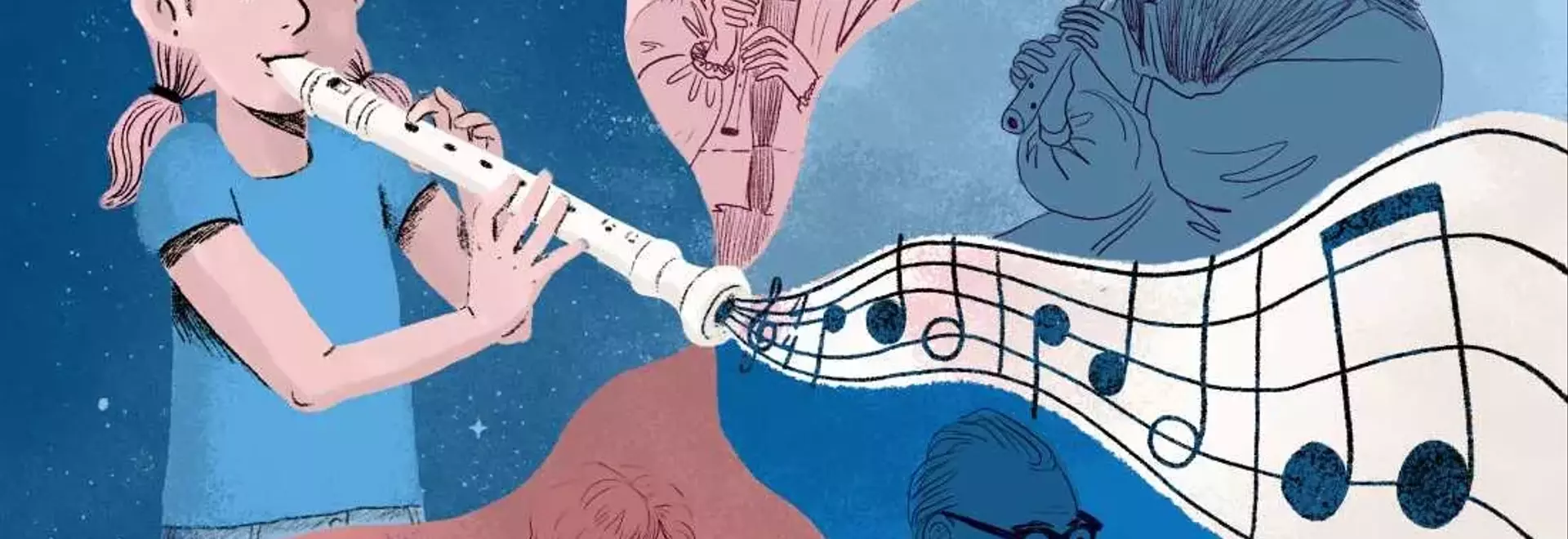
The ubiquitous plastic recorder, often the first musical instrument encountered by countless schoolchildren, holds a unique place in elementary music education. While recent trends indicate a decline in its usage in some regions, particularly in the United Kingdom and the United States, attributed to factors like COVID-19 related restrictions and the growing popularity of instruments such as the ukulele, its foundational role persists in many classrooms. For instance, at Parkside Elementary in Atlanta, the enthusiasm for the recorder remains vibrant, with band teacher Phillip Edwards successfully engaging second-graders, turning lessons into exciting experiences that resonate deeply with the young learners.
The recorder's enduring appeal as a teaching tool stems from its inherent simplicity and pedagogical effectiveness. Music educators universally praise its capacity to introduce core musical concepts, including breath control, focus, and pitch recognition, to young students. Unlike more complex wind instruments that demand specific embouchure techniques, the recorder allows beginners to produce sound effortlessly, much like a whistle. Its compact size and affordability further enhance its suitability for elementary settings. Moreover, the recorder simplifies music literacy; it requires students to read and play only one melodic line at a time, facilitating quicker comprehension and enabling rapid progress through simple tunes. This accessibility has even been noted to provide empowering experiences for children, such as one individual with autism who found confidence in its straightforward playability.
Beyond its immediate educational benefits, the recorder boasts a rich historical lineage, tracing its origins back to the 15th-century Renaissance period, where it was a sophisticated instrument enjoyed by all ages, including royalty like King Henry VIII. Its prominence diminished around the mid-18th century, overshadowed by the transverse flute, only to be resurrected in the early 20th century by visionaries like instrument-maker Arnold Dolmetsch and composer Carl Orff. These pioneers advocated for its use in school music programs. The advent of plastic injection molding in the mid-20th century further cemented its place, allowing for mass production and distribution to schools at minimal cost, making it the prevalent choice for introductory music lessons. Despite its perception as merely a beginner's instrument, experts emphasize the recorder's potential as a serious musical tool, often misunderstood because few students advance beyond basic proficiency. However, for many, it serves as a crucial gateway, sparking a lifelong interest in music.
The journey of the recorder from a sophisticated Renaissance instrument to a common classroom staple exemplifies how simplicity, accessibility, and effective pedagogical design can create profound opportunities for learning and personal growth. It demonstrates that fundamental tools, often underestimated, can ignite a passion for the arts and build essential skills. Encouraging engagement with such instruments fosters creativity, discipline, and a deep appreciation for the universal language of music, proving that even the humblest beginnings can lead to extraordinary accomplishments.
