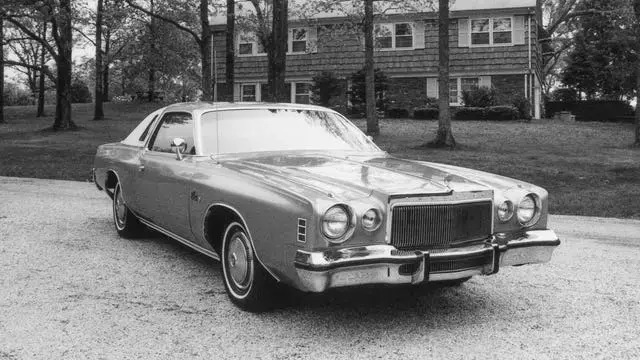
The Enduring Appeal of the 1977 Chrysler Cordoba: A Dive into Personal Luxury
In August 1976, Car and Driver magazine published an in-depth analysis of the 1977 Chrysler Cordoba, highlighting its unexpected success in the burgeoning personal luxury car market. This article explores how the Cordoba managed to captivate American car buyers by masterfully combining elements of traditional luxury with a more compact design. It dissects the Cordoba's appeal, focusing on its plush interior, refined ride quality, and the innovative engineering behind its "lean-burn" engine, which set it apart from its contemporaries. The review delves into the strategic decisions made by Chrysler that allowed the Cordoba to carve out a significant niche, proving that a car could be both a status symbol and a comfortable, unpretentious mode of transport, ultimately influencing the automotive landscape of its era.
The mid-1970s saw a surge in demand for personal luxury vehicles, a segment where style often took precedence over dynamic performance. Chevrolet's Monte Carlo had set a high benchmark, demonstrating that distinctive features like opera windows and a sophisticated facade could drive sales. Chrysler, recognizing this trend, introduced the Cordoba with an advertising campaign evoking Spanish grandeur. The strategy proved immensely successful, with the car selling rapidly and exceeding Chrysler's expectations, helping to steer the company through challenging financial times. Despite its rapid ascent, the Cordoba was more than just a superficial imitation of its rivals.
The Cordoba distinguished itself by offering a unique blend of luxury and practicality. While personal luxury cars typically prioritized aesthetic flourishes such as ornate rooflines and decorative trim, the Cordoba provided these while also serving as a more compact alternative to the larger, more cumbersome luxury sedans of the time. Its design resonated with consumers who desired the prestige of a luxury car but were not necessarily looking for a sports car's handling or a traditional large sedan's sheer size. This approach allowed Chrysler to focus on creating an environment of comfort and indulgence rather than emphasizing aggressive performance metrics.
The driving experience in the Cordoba was characterized by extreme comfort and an almost serene detachment from the road. The interior was lavishly appointed, featuring crushed velvet upholstery and deep-pile carpeting, creating an ambiance reminiscent of an upscale lounge. The innovative 60/40 split front bench seat, designed with a folding armrest, offered both the feel of individual seating and the flexibility to accommodate three passengers, reflecting a design compromise to appeal to a broad spectrum of buyers who valued both luxury and the versatility of a larger sedan. The dashboard, while lacking the elaborate "airplane-cockpit" styling popular at the time, prioritized ease of access to essential controls like air conditioning and the four-speaker stereo, further enhancing passenger comfort.
Beneath its luxurious facade, the Cordoba was engineered for a smooth, composed ride. Chrysler's focus was on passenger comfort, not aggressive handling or cornering prowess. The car’s suspension system was designed to absorb road imperfections, creating a sense of effortless momentum that isolated occupants from external disturbances. This smooth operation was further enhanced by the exceptional noise insulation, making the Cordoba's cabin a remarkably quiet sanctuary from road and traffic sounds. These engineering choices underscored Chrysler's commitment to delivering a truly passenger-centric experience.
One of the Cordoba's most notable innovations was its 400-cubic-inch "lean-burn" V-8 engine. Unlike other large V-8s of the era, which often struggled with emissions regulations, leading to rough operation, the Cordoba's engine featured an electronically controlled ignition system that optimized the air-to-fuel ratio. This not only improved emissions but also ensured exceptionally smooth performance, free from hesitation or knocking. Sensors continuously monitored various engine parameters, allowing a "black-box" computer to adjust spark timing instantaneously, resulting in seamless power delivery and improved fuel economy. This advanced engine contributed significantly to the Cordoba's serene driving dynamics, ensuring that the driver's attention was never diverted by mechanical inefficiencies. Despite its potential for enhanced performance, the system was configured to promote a gentle driving style, signaling aggressive acceleration with a warning light, aligning with the car's overall emphasis on comfort over speed.
In essence, the Chrysler Cordoba became a benchmark for personal luxury cars by striking a unique balance. While some personal luxury vehicles leaned heavily into extravagant styling, the Cordoba successfully blended understated elegance with practical features expected from larger sedans. Its remarkable sales figures demonstrated that buyers sought a car that exuded status and provided comfort without requiring a compromise on versatility. The Cordoba's success showed that the public appreciated a vehicle that delivered on its promise of luxury and refinement, rather than merely offering flashy aesthetics or aggressive handling characteristics.
