Emerging Markets Attracting Investment Amidst Global Challenges
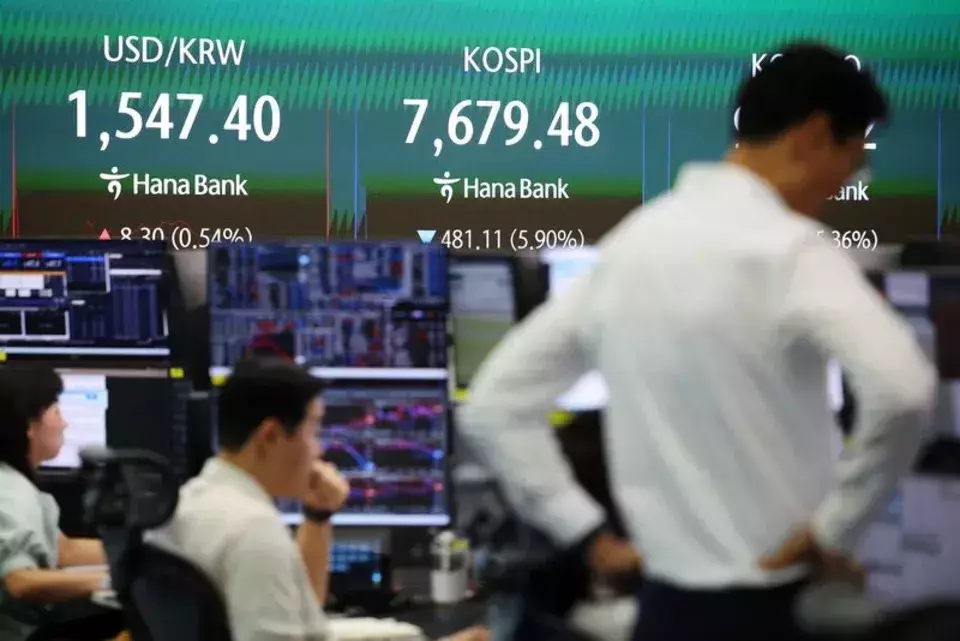
Emerging economies are demonstrating remarkable resilience, drawing significant investor capital despite a turbulent global landscape marked by conflicts, trade tensions, and AI-driven market fluctuations. This unexpected vigor is largely due to enhanced policy frameworks, strengthened foreign exchange holdings, and the expansion of internal capital pools. These factors collectively provide a buffer against external shocks, making these markets increasingly attractive to international investors seeking diversification.
Emerging Markets' Ascent: A Detailed Financial Overview
In a significant shift, global financial markets are observing a robust influx of capital into emerging economies. Recent data from the Institute of International Finance indicates that foreign investors channeled an impressive $214.4 billion into emerging market debt by July, a substantial increase from $177.7 billion during the same period last year. This surge coincides with a record-breaking bond issuance, with developing nations collectively selling approximately $19 billion in bonds in July alone, doubling the historical monthly average for the past decade and pushing year-to-date issuance to an unprecedented $187 billion.
This financial resurgence is unfolding against a backdrop of complex global dynamics. The ongoing conflict, which commenced in February, has notably impacted the Strait of Hormuz, driving up global prices for oil and fertilizers, consequently fueling inflation and food costs. Concurrently, concerns persist regarding potential interest rate hikes by the U.S. Federal Reserve, which could bolster the dollar and exert pressure on various emerging market currencies. Despite these challenges, investor interest remains undeterred.
Market analysts, including Jetro Siekkinen, head of emerging market fixed income at LGT Capital Partners, highlight a weakening in the fundamental economic indicators of developed nations, particularly concerning their debt-to-GDP ratios. In stark contrast, many emerging economies have diligently fortified their central bank independence and accumulated substantial foreign currency reserves over recent years. Countries such as Pakistan, Ghana, Ecuador, Nigeria, and Argentina have even received credit rating upgrades, underscoring their improved fiscal health and governance. This strategic strengthening, coupled with a deliberate move away from U.S. assets, is a primary driver behind the current robust performance of emerging and frontier markets.
David Hauner, head of emerging markets fixed income strategy at Bank of America, characterizes the period from 2015 to 2025 as a "valley of tears" for these markets, plagued by a strong dollar, U.S. economic exceptionalism, numerous crises, defaults, and the COVID-19 pandemic. However, he notes that these trying times have inadvertently set the stage for the current recovery, suggesting that the recent inflows are merely "scratching the surface" of a decade of under-investment. The lessons learned from the COVID-19 era, where investor exits led to debt defaults in countries like Sri Lanka and Ghana, have spurred efforts to cultivate deeper domestic capital markets, reducing reliance on volatile foreign investment.
Today, major emerging economies, including South Africa and Brazil, predominantly finance themselves through internal debt markets. According to research from JPMorgan and UBS, local-currency sovereign bonds outstanding reached approximately $13 trillion by the end of 2024, dwarfing the roughly $1.4 trillion in international hard-currency sovereign debt. Magdalena Polan, head of EM Macro Research at PGIM, emphasizes that large local investors are now playing a crucial stabilizing role, mitigating rapid market sell-offs and preventing liquidity crunches in most countries. While inflation risks stemming from El Niño and rising fertilizer costs remain significant threats, experts like Polan, Hauner, and Carmignac's fund manager Lamine Bougueroua believe there is substantial room for continued growth and outperformance in emerging market local debt.
This enduring appeal underscores a broader trend of investor diversification. As global investors reassess their exposure, particularly to U.S. assets, the robust fundamentals and enhanced stability of emerging markets are positioning them as essential components of a well-balanced, globally diversified portfolio.
