Devastating Earthquake Strikes Eastern Afghanistan
News

Devastating Earthquake Strikes Eastern Afghanistan

authorBy Rageh Omaar
DateSep 01, 2025
Read Time2 min

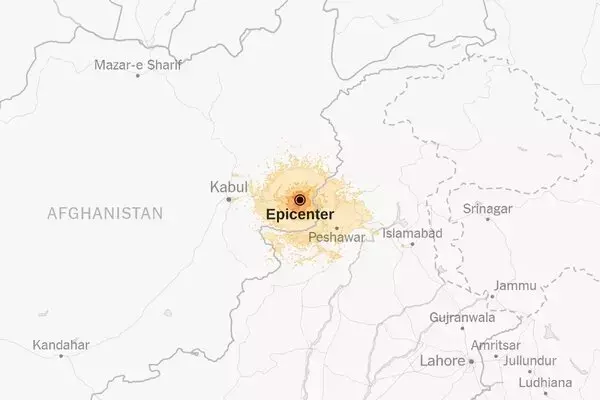
A recent powerful earthquake, measuring 6.0 on the Richter scale, has tragically impacted eastern Afghanistan, leading to a substantial loss of life and numerous injuries. On Monday, authorities confirmed hundreds dead and over 2,500 wounded, with expectations that these numbers will continue to rise as rescue efforts progress. The tremor, which also sent strong aftershocks through the capital, Kabul, struck overnight, catching many residents unprepared.

The seismic event's epicenter was identified near Jalalabad, a city of approximately 200,000 residents located less than 100 miles from Kabul and in close proximity to the Pakistan border. The shallow depth of the quake, merely five miles beneath the Earth's surface, significantly contributed to its destructive potential. Initial reports and social media footage depicted harrowing scenes of people desperately attempting to extricate neighbors from the rubble of collapsed homes in the immediate aftermath. Four eastern Afghan provinces—Nangarhar, Nuristan, Laghman, and Kunar—have been confirmed as affected, with dozens of villages, primarily consisting of vulnerable mud and brick houses, sustaining severe damage, particularly in Kunar province, north of Jalalabad.

In the face of such profound natural calamities, the resilience of affected communities and the swift, coordinated response of aid organizations become paramount. This tragic event underscores the critical need for robust disaster preparedness and international cooperation to mitigate human suffering. Each individual life saved and every act of compassion extended in these dire circumstances reinforces the shared humanity that binds us, reminding us that collective action and unwavering support can illuminate the darkest hours and foster recovery and hope for a brighter future.

More Articles
News
Taiwan's Commitment to Combating Human Trafficking and Protecting Migrant Workers
Taiwan has been recognized for its persistent efforts in combating human trafficking, maintaining a Tier 1 ranking in the U.S. State Department's annual report for four consecutive years. This achievement highlights the nation's comprehensive strategies, including enhanced legal frameworks, proactive law enforcement, and extensive victim support services. The government's dedication extends to safeguarding the rights of migrant workers, a particularly vulnerable group, through various protective measures and international cooperation.
By Katty KaySep 01, 2025
News
Federal Employee Unions Face Unprecedented Challenges Under Current Administration
The current administration's executive orders have severely curtailed collective bargaining rights for over a million federal workers, triggering widespread legal battles and union office closures. While unions assert these actions are retaliatory, the administration justifies them under the guise of national security, raising concerns about the future of public service and employee advocacy.
By Michele NorrisSep 01, 2025
News
Jasper National Park: A Year After the Blaze, Lessons for Future Wildfire Management
One year after a devastating wildfire ravaged parts of Jasper National Park in Alberta, researchers are studying the scorched landscape to glean crucial insights for combating future blazes. The intense fire, fueled by ferocious winds, obliterated vast sections of the park, burning soil and exposing bedrock. This event, which led to the evacuation of 20,000 people and extensive property damage, offers valuable lessons for a nation grappling with escalating wildfire crises.
By Rageh OmaarSep 01, 2025
News
Global Geopolitics and the Shifting Landscape of Explosive Supply
The United States, for over a century, relied on TNT for both military and commercial applications due to its abundance and affordability. However, the production of TNT generates hazardous waste, leading to the closure of domestic manufacturing facilities by the mid-1980s. This created a dependency on foreign suppliers, particularly from China, Russia, Poland, and Ukraine, who provided the explosive at low costs. Additionally, recycled TNT from decommissioned military munitions served as another important source. Recent geopolitical shifts, specifically Russia's invasion of Ukraine, have disrupted these supply chains, as military demands for TNT have surged, impacting its availability for civilian uses.
By Christianne AmanpourSep 01, 2025
News
The Silent Revolution: Schools Embrace Phone-Free Learning
As the new academic year commences, an increasing number of educational institutions nationwide are implementing policies to restrict or ban student cell phone use during school hours. This shift aims to enhance classroom engagement, reduce anxiety, and foster a more equitable learning environment, despite facing some resistance from students and logistical challenges for schools. The movement highlights a growing consensus among educators and policymakers about the disruptive impact of personal devices in academic settings.
By Christianne AmanpourSep 01, 2025