The Definitive Guide to Holiday Leftovers: Storage, Safety, and Smart Usage
Effectively managing holiday meal remnants requires careful planning and adherence to food safety principles. By following expert advice on proper storage temperatures, prompt refrigeration, and strategic freezing, you can extend the enjoyment of your festive dishes while minimizing waste and ensuring health. Understanding the shelf life of different foods and implementing smart reheating techniques are key to transforming leftovers into delicious and safe subsequent meals.
Ensuring the longevity and safety of your holiday feast begins with diligent food preparation. Experts emphasize the importance of meticulous handwashing before and after handling raw ingredients to prevent cross-contamination. It is crucial to avoid washing raw poultry, as this can spread bacteria. Always use a meat thermometer to confirm that all foods reach their safe internal cooking temperatures. These foundational steps are vital for eliminating harmful bacteria right from the start of your culinary efforts.
Following the meal, swift refrigeration of all dishes is paramount. Foods left between 40°F and 140°F enter what is known as the "danger zone," where bacteria multiply rapidly. Aim to place all perishable items into the refrigerator within two hours of cooking to halt bacterial growth. Maintaining your refrigerator's temperature below 40°F and your freezer at 0°F or lower is essential. To facilitate rapid cooling, especially for large quantities, divide dishes into smaller, shallow containers before refrigeration.
For optimal cooling efficiency, consider utilizing wide, shallow stainless-steel pans, similar to practices in professional kitchens. At home, shallow containers, takeout boxes, or disposable foil trays can serve the same purpose, allowing food to cool more quickly and safely. It's also vital to store leftovers in airtight containers and portion them out to prevent repeated reheating of the same large batch, which can compromise food safety. Proper sealing also protects against drying out, flavor degradation, and freezer burn. Always label and date your stored food for easy tracking. While it's safe to refrigerate small portions of warm food, large hot items should cool slightly before freezing to avoid increasing the freezer's overall temperature.
Generally, most holiday leftovers maintain their quality and safety for two to four days in the refrigerator. Therefore, it is advisable to consume or freeze these items by the end of the holiday weekend. Any food remaining beyond Monday morning should be discarded. Many traditional holiday dishes, such as stuffing or mashed potatoes, can be frozen, though their texture might alter upon thawing. Dairy-rich items may become grainy or watery, but stirring can help restore consistency. Although freezing preserves food indefinitely, consuming items within three to four months is recommended for best taste and texture. To mitigate safety risks, avoid repeatedly thawing, reheating, and refreezing leftovers.
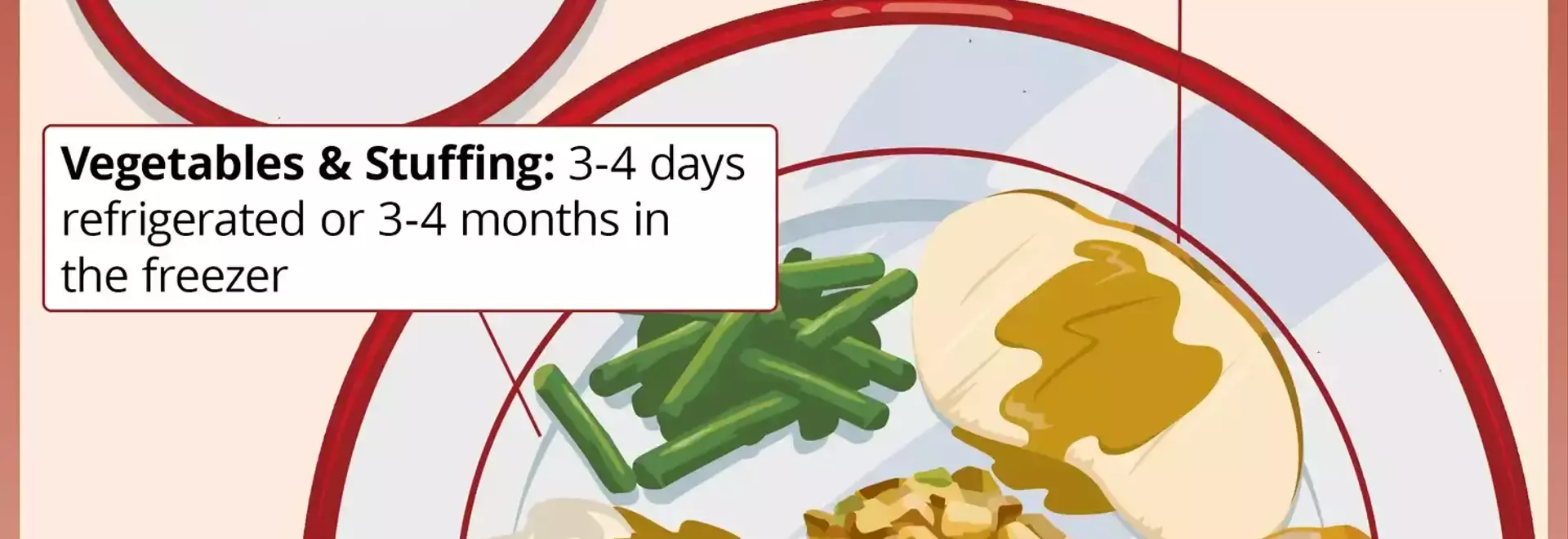
Specific storage recommendations vary by dish. Large cuts of meat like turkey or ham can be refrigerated for three to four days or frozen for two to six months. Reheating turkey in an oven can prevent off-flavors associated with microwave reheating. The carcass of a cooked bird can be frozen for up to four months before being used to make stock. Mashed potatoes are good for three to four days in the fridge and up to four months frozen; ensure they are heated until steaming hot with no cold spots. Gravy also lasts three to four days refrigerated and can be boiled on the stove to eliminate bacteria before serving. Stuffing or dressing can be enjoyed for three to four days, and oven reheating can restore its crispy texture. It freezes well for three to four months. Cranberry sauce, due to its high acidity and sugar, typically lasts up to seven days in the fridge and can be frozen for four months, though jellied versions may experience texture changes.
Vegetable side dishes, including roasted Brussels sprouts, green bean casserole, and sweet potato casserole, generally last three to four days. Roasted vegetables are best eaten promptly to avoid sogginess. These can also be frozen for up to four months and thawed in the refrigerator overnight before reheating. Casseroles benefit from oven reheating to restore their characteristic crispy tops. Pumpkin pie should be refrigerated within two hours of baking and consumed within two to three days. Store-bought pies might have a longer shelf life at room temperature, but refrigeration is always safer. To freeze pumpkin pie, ensure it's completely cool, then wrap it securely and store it in an airtight container for three to four months. Apple pie can be kept at room temperature for up to two days or refrigerated for three, though refrigeration might make the crust stale more quickly.
Thoughtful food handling and storage practices are essential for maximizing the enjoyment and safety of your holiday meals. By planning ahead, preparing appropriate storage containers, and being mindful of optimal temperatures for refrigeration and freezing, you can effortlessly extend the life of your festive dishes. These strategies not only reduce food waste but also ensure that every subsequent meal from your holiday spread is as delicious and safe as the first. Always prioritize prompt cooling, thorough reheating, and clear labeling to keep your leftovers at their best.
