Debunking Death Rumors: The Case of the President's Health Speculation
News

Debunking Death Rumors: The Case of the President's Health Speculation

authorBy Anderson Cooper
DateSep 03, 2025
Read Time2 min

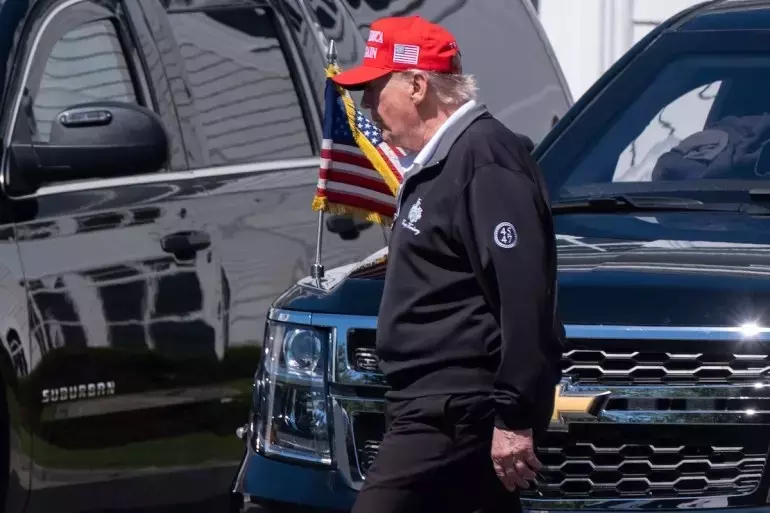
A recent holiday weekend saw an eruption of online speculation concerning President Trump's health, with trending hashtags and viral videos suggesting his death or a severe medical emergency. However, these widespread claims were unequivocally false. The President appeared publicly and was photographed by news agencies, actively refuting the rumors. He even addressed a reporter's question about the death hoax, noting he hadn't seen the specific claims but understood the underlying sentiment when he took a brief break from public engagements.

The origins of this misinformation are multifaceted. A key factor was a misconstrued comment from Vice President JD Vance during an interview, where his remarks about being prepared for the presidency in a hypothetical tragedy were taken out of context. This, coupled with the President's quiet holiday weekend devoid of public appearances, fueled suspicion among certain political commentators and liberal influencers. Exaggerations of Trump's known, but non-life-threatening, health condition—chronic venous insufficiency, which can cause swollen ankles and bruised hands—further amplified the baseless theories, leading some to wrongly infer more serious ailments like strokes or heart attacks. This rapid spread of unverified information highlights the challenges of discerning truth in the digital age, especially when political narratives are involved.

Historically, rumors of leaders' deaths have circulated, particularly when press access is limited or there's an intent to destabilize legitimacy, as seen with figures like Joseph Stalin, Fidel Castro, and Kim Jong Un. This incident serves as a contemporary example of how easily false narratives can gain traction, especially within a highly polarized political environment where individuals may be inclined to believe information that aligns with their biases. It underscores the critical importance of seeking verified sources and exercising discernment to counter the rapid spread of misinformation, thereby promoting a more informed and rational public discourse.

More Articles
News
Diplomatic Insights: China's Ambitions and the Global Stage
A former U.S. envoy to China offers his perspective on the nation's military displays and ongoing efforts to redefine the international political landscape. This discussion highlights the profound shifts occurring in global power dynamics and the implications for future international relations.
By Carl BernsteinSep 03, 2025
News
Congressional Urgency: The Push for Full Transparency in the Jeffrey Epstein Case
In a bipartisan effort, members of Congress are intensifying their demands for the complete disclosure of all investigative documents related to Jeffrey Epstein. This renewed legislative push aims to compel a vote on releasing these sensitive files, reflecting a growing insistence on transparency and accountability surrounding the high-profile case.
By Ann CurrySep 03, 2025
News
The Fascinating Role of 'Um' in Human Communication
The seemingly insignificant filler word 'um' plays a multifaceted role in communication, serving not only as a temporal placeholder during thought processes but also as a social cue. This article explores the various functions of 'um,' its linguistic prevalence across cultures, its evolving presence in written communication, and the societal perceptions surrounding its usage. Experts shed light on how 'um' facilitates conversational flow and acts as a subtle signal of continued engagement, challenging its often-negative connotations.
By Isabel AllendeSep 03, 2025
News
A Protest in China Doubles as Performance Art
An activist in China transformed a protest into performance art, projecting anti-government slogans onto a building in Chongqing. This act of defiance, captured and shared online, highlights the enduring spirit of resistance in a highly surveilled nation, challenging state censorship and control.
By Anderson CooperSep 03, 2025
News
White House Exhibit Sparks Historical Accuracy Debate with AI Integration
A new exhibit, 'The Founders Museum,' launched by the Trump administration in partnership with PragerU, features paintings and AI-generated videos of historical figures. This initiative, aiming to commemorate America's 250th anniversary, has drawn criticism from historians who question its narrow focus and the potential for AI to distort historical narratives, particularly concerning the omission of marginalized voices and the subtle blending of factual accounts with modern commentary.
By Michele NorrisSep 03, 2025