A Daughter Reconsiders Her Family's Legacy in 'The Mixed Marriage Project'
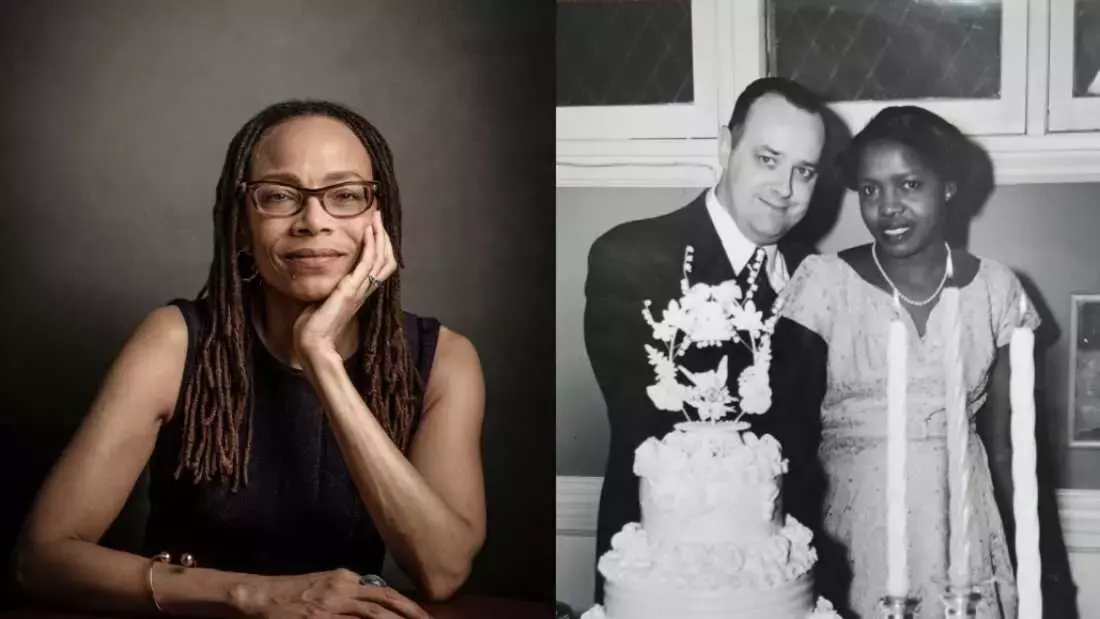
Dorothy Roberts, a distinguished legal scholar, recently undertook a profound journey of self-discovery and familial re-evaluation through her new book, 'The Mixed Marriage Project.' This endeavor began with unearthing nearly 500 interview transcripts collected by her late father, Robert Roberts, a white anthropologist, on interracial couples in Chicago. What started as an effort to complete her father's unfinished work evolved into a deeply personal exploration when she discovered her mother, Iris, a Black Jamaican immigrant, had been an uncredited yet crucial contributor to the research, particularly in interviewing the wives. This revelation prompted Roberts to critically examine her parents' mixed-race marriage and her own identity as a Black woman with a white father, offering fresh perspectives on race, love, and the complex dynamics of family in America.
The meticulous research conducted by Robert Roberts involved extensive interviews with interracial couples across Chicago, spanning from the late 1800s to the 1960s. His collection provided a unique window into the social fabric of the city, highlighting the entrenched racial segregation, often referred to as the 'Color Line' and the 'Black Belt.' Dorothy Roberts found these interviews to be incredibly illuminating, offering insights into the lived experiences of individuals navigating a society deeply divided by race. The transcripts detailed the challenges faced by these couples, including social ostracization, employment discrimination, and the constant negotiation of their public and private lives. It was within this rich archive that Roberts made the surprising and personally impactful discovery of her mother's involvement.
Upon reviewing the transcripts, Roberts uncovered a significant disparity between her parents' interviewing styles and focus. Her father's notes often contained anthropological observations on physical traits, including what he termed 'Negroid traits' and discussions of 'Negroid blood' in children, reflecting the problematic racial theories prevalent in the 1930s. In stark contrast, her mother's interviews revealed a more empathetic and detailed account of the wives' personalities, their domestic lives, and their interactions with their children. Iris's notes were described as vivid and almost cinematic, capturing the emotional depth and daily realities of these women, a dimension largely absent from her husband's more clinical approach. This difference underscored the distinct perspectives they each brought to the study, and for Dorothy, illuminated her mother's significant, though unacknowledged, intellectual contribution.
One particularly striking aspect that emerged from the interviews was the often-romanticized or fetishized perception of interracial relationships and biracial children. Roberts encountered narratives where Black men expressed a preference for white women, suggesting an 'extra excitement' or 'titillation' associated with interracial intimacy. Similarly, the idea that 'whitening' children made them more appealing or intelligent was a recurring, disturbing theme. Roberts admits to a 'visceral revulsion' at these sentiments, which highlight the deep-seated racial biases and the commodification of race within personal relationships. These findings compelled her to challenge simplistic notions of love transcending race, and instead, to advocate for a more nuanced understanding of how societal racism infiltrates even the most intimate connections.
Roberts also reflected on her own past, specifically her decision during college to identify solely as Black and to conceal her white father's racial background. She expressed regret over this choice, recognizing it as a denial of a crucial part of her identity and a disservice to her father's influence. This introspective journey ultimately led her to embrace her full identity as a Black woman with a white father, acknowledging the profound impact he had on her development, particularly in shaping her commitment to combating racism and uplifting Black women. She realized that her father's teachings and their complex family history were instrumental in forging her passion for social justice, and that denying his role would be to deny a fundamental aspect of herself.
Ultimately, 'The Mixed Marriage Project' provided Dorothy Roberts with a powerful framework to understand the enduring legacy of race in America and its intricate connection to personal relationships. The stories of these interracial couples, including her own parents, reveal how the social construct of race can fracture even the strongest family bonds, as exemplified by her uncle's estrangement from her father after his marriage to her mother. The book posits that genuine love across racial divides requires more than mere sentiment; it demands an active engagement with, and dismantling of, structural racism. It is a call to recognize our shared humanity and to commit to the ongoing work necessary to overcome the deeply entrenched systemic barriers that race has imposed on society.
