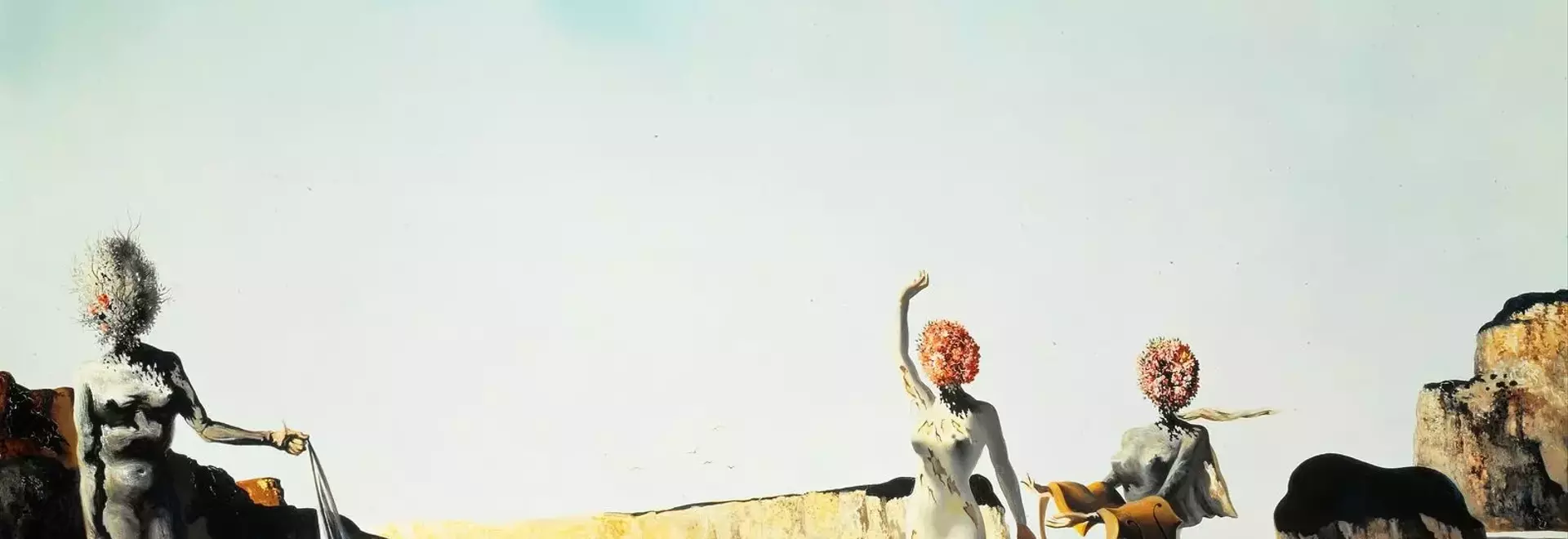
Dalí and Fashion: A Surreal Exploration of Style
The Palazzo Reale in Milan is set to host a groundbreaking exhibition, "Dalí and Fashion," starting September 24, offering a fresh lens through which to view the iconic Surrealist artist. This exhibition aims to unravel the deep and often intertwining relationship between Salvador Dalí's artistic vision and the world of fashion, presenting a comprehensive look at his stylistic evolution, collaborations, and the profound impact of Surrealism on sartorial expression. Co-curated by Judith Clark, in partnership with Laura Bartolomé and under the academic guidance of Montse Aguer, the exhibition at the Fundació Gala-Salvador Dalí, Figueres, promises to re-examine Dalí's position in the cultural landscape, revealing the multifaceted interpretations his work continues to inspire.
Judith Clark, co-curator of the upcoming "Dalí and Fashion" exhibition, reflected on her early experiences with fashion and art exhibitions, particularly recalling the 1993 Florence Biennale's "Il Tempo e la Moda." This seminal exhibition explored the century-long interplay between fashion and art, commencing with Giacomo Balla's Futurist vest and swiftly transitioning to the dreamlike realm of Surrealism. Clark noted that such exhibitions endeavor to dismantle the traditional hierarchy between these two disciplines, fostering a deeper understanding of their symbiotic relationship.
When fashion is viewed in relation to specific artistic movements rather than judged by predefined artistic merits, its inherent connections and points of convergence become more apparent. Surrealism, in particular, has frequently featured in recent fashion exhibitions. Valerie Steele's "Dress, Dreams, and Desire: Fashion and Psychoanalysis" at the Fashion Institute of Technology in New York, for instance, pioneered the cultural history of fashion and psychoanalysis. Steele highlighted Jacques Lacan's crucial role in expanding the dialogue between fashion, Surrealism, and psychoanalysis beyond Freudian concepts, introducing themes of self-alienation, body image, fragmentation, and aggression.
Other significant exhibitions, such as "Art X Fashion" at the FIT Museum, "Schiaparelli: Fashion Becomes Art" at the Victoria and Albert Museum, and "Costume Art" at the Metropolitan Museum, have also explored similar themes. Andrew Bolton, curator of "Costume Art," emphasized the exhibition's focus on fashion's materiality and the intrinsic link between the human body and clothing. By showcasing artifacts spanning five millennia, this exhibition constructs a compelling narrative of fashion and the body—encompassing its material, carnal, vulnerable, seductive, devotional, and fragmented aspects—and its translation into various expressive forms. This approach prominently positions the body as a central, albeit previously implicit, element within the museum's discourse.
The Palazzo Reale exhibition, structured chronologically, will delve into Dalí's personal reflections from "The Secret Life of Dalí," illustrating how he meticulously crafted his public persona, from his distinctive upturned mustache to his signature attire. It will also highlight his extensive involvement in the fashion industry, from textile design and advertising campaigns to magazine covers and his roles as guest editor and model. Furthermore, the exhibition will examine his collaborations with prominent fashion figures: Gabrielle Chanel, Christian Dior, Paco Rabanne, and Elsa Schiaparelli, whose partnerships yielded some of the twentieth century's most iconic fashion pieces, including the famous Shoe Hat and Lips Jacket.
A unique aspect of the exhibition is the inclusion of Salvador and Gala Dalí's personal wardrobe, displayed for the first time in Italy. These garments, preserved in their Púbol castle, offer insight into the couple's consistent stylistic coherence and serve as material references for pieces depicted in Dalí's paintings. The exhibition also features a remarkable collection of Dalí's jewelry, such as the Ruby Lips brooch, Leaf Veined Hands, The Eye of Time watch-brooch, and the Corset Ring. These jewels, designed to be worn unconventionally, signify the pervasive Surrealist influence, treating them as fragments separated from the body.
The exhibition's design maintains a deliberate restraint, avoiding theatricality to allow the artworks to infuse color into a monochromatic palette of eggshell cream, Mediterranean white, and museum gray. This minimalist approach extends to the decorative elements, which employ a "sampling" technique where only portions of surfaces are adorned, suggesting a complete decorative scheme without excessive material use. This reflects a contemporary museological practice that views design as proactive rather than merely scenographic, minimizing waste and inviting viewers to engage with hypotheses and experiments in display.
The collaboration with Bonaveri on mannequins, further enhanced by Angelo Seminara's hair creations, renews the dialogue surrounding fashion exhibitions. The mannequins’ raw canvas coverings emphasize conservation rather than human skin simulation, highlighting a core principle of museum practice. Ultimately, "Dalí and Fashion" prompts a re-evaluation of how fashion is judged, encouraging contemplation of its existence as a conceptual act independent of production methods—a process Dalí himself embraced, exploited, and transformed into art.
