Costco and Walmart Dominate Grocery Market Amid Shifting Consumer Habits
In an era marked by escalating costs and pervasive economic anxieties, American consumers are meticulously scrutinizing their grocery expenditures. This climate has propelled retail giants Costco and Walmart to the forefront of the grocery market, demonstrating a profound shift in consumer purchasing behaviors.
Detailed Report on Evolving Grocery Shopping Trends
Recent insights from the Food Industry Association's (FMI) "June Grocery Shopper Snapshot" reveal a stark reality: a significant majority of Americans, by a two-to-one margin, perceive their household financial standing to be worse than a year prior. Only a quarter of shoppers report being financially comfortable enough to save. Macroeconomic pressures, particularly inflation (71% expressing high concern) and the broader U.S. economic outlook (66%), have reached unprecedented levels of public worry. Furthermore, nearly half of all grocery shoppers (49%) harbor anxieties about job market stability.
The surge in fuel prices has also profoundly impacted shopping routines. The FMI reported that concerns over gas prices escalated dramatically, from 43% in December to 69% in June 2026, with a similar percentage (70%) noting increased spending on fuel during the first half of the year.
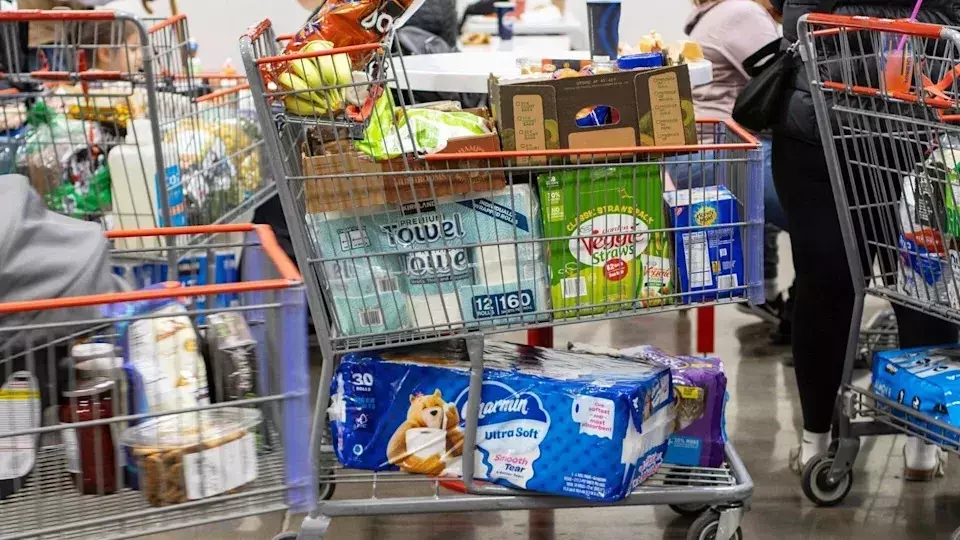
Against this backdrop, a YouGov survey identified Costco as the leading grocery destination for higher-income households. Approximately 11% of individuals earning at least $150,000 annually cited Costco as their primary grocery provider, surpassing Kroger (10%) and Walmart Supercenter (8%). This preference for Costco, a membership-based warehouse retailer, underscores a desire for bulk value even among affluent consumers. Food industry analyst Phil Lempert from California explained to Fox News Digital that wealthier families, often larger, find Costco's bulk offerings perfectly align with their needs, emphasizing that even those with substantial incomes prioritize value and frugality.
McKinsey's "The State of Grocery North America 2026," released on June 17, indicated that while the U.S. grocery sector saw a 1.2% growth in 2025, this was predominantly price-driven, with actual shopping volumes declining. This report highlights a fragmentation of shopping habits, where consumers no longer adhere to a singular approach for all their needs. Instead, they distribute their purchases across various channels, including value-oriented bulk buying, fresh produce purchases, convenience deliveries, health-focused baskets, and incidental fill-in trips. McKinsey stressed that the modern concept of value is now intricately linked to a comprehensive system encompassing pricing strategies, essential item availability, promotions, loyalty programs, personalized offers, and private-label brands.
A March survey by Snipp corroborated the impact of rising gas prices, noting that over 31% of respondents felt a significant or extreme effect on their household budgets, prompting 66.4% to modify their overall spending habits. Intriguingly, 37.6% of shoppers reported an increase in weekly grocery spending compared to three months prior, even while actively trying to reduce costs. This paradoxical trend suggests that escalating grocery prices are outpacing consumers' efforts to adapt their spending behaviors.
Reflections on the Evolving Consumer Landscape
The latest revelations regarding consumer grocery preferences offer a compelling look into the ongoing economic adjustments faced by households across various income brackets. It's clear that the pursuit of value has transcended traditional income divides; even affluent shoppers are now seeking cost-effective solutions for their everyday needs. This era demands that retailers not only offer competitive pricing but also cultivate a holistic value proposition, including efficient shopping experiences and diverse product offerings. The ascendancy of Costco and Walmart signals a paradigm shift where economic pressures are reshaping loyalty and redefining what constitutes a smart shopping choice, underscoring the resilience and adaptability of consumers in managing their budgets.
