Coca-Cola: From Dividend King to Growth Powerhouse
The Unexpected Ascent: Coca-Cola's New Growth Trajectory
World Cup Hydration Breaks: A Strategic Marketing Victory
During the recent World Cup, typically viewed as a platform for global sportsmanship, extended hydration breaks became an unexpected boon for Coca-Cola. While soccer aficionados debated the impact on game flow, these pauses provided invaluable commercial opportunities. Coca-Cola, a longstanding beverage sponsor, capitalized on these moments with prominent in-stadium marketing, effectively transforming what some saw as interruptions into a powerful branding exercise. This strategic visibility during critical moments contributed significantly to an unusually robust financial quarter for the company.
Financial Surges: Exceeding Expectations with Strong Second-Quarter Performance
In a departure from its predictable pattern, Coca-Cola's second-quarter financial performance exhibited exceptional vigor. Net revenue ascended by 7% to reach $13.4 billion, while comparable earnings per share climbed by 11% to 97 cents, surpassing Wall Street's projections. This robust growth was not solely dependent on existing product lines; global unit case volume increased by 5%, a rate unseen in years outside of pandemic recovery periods. The growth was broadly distributed, with Zero Sugar volume soaring by 16%, significantly outpacing the company's overall growth and demonstrating the success of its diversified product portfolio beyond traditional offerings.
Diversified Product Success: Beyond the Flagship Brand
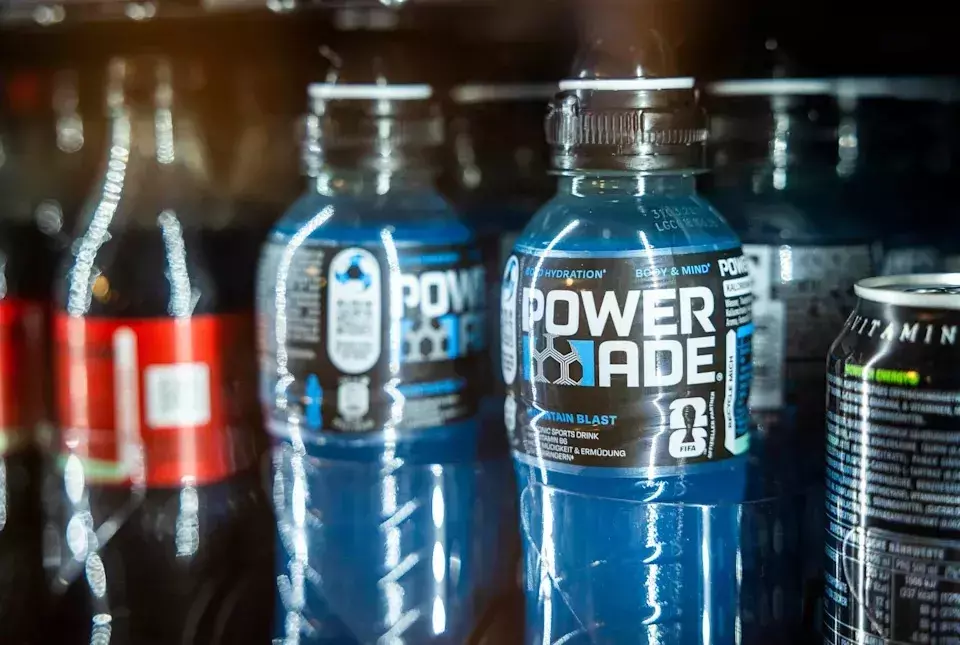
The company's recent acceleration extends beyond its iconic Coca-Cola brand. Diet Coke saw a 7% increase in volume, while the classic Trademark Coca-Cola experienced its strongest growth in 17 years, excluding pandemic-related fluctuations. Powerade also contributed significantly, with an 8% volume jump, partly fueled by its visible placement during the World Cup's hydration breaks. This diverse growth trajectory indicates that Coca-Cola is successfully expanding its market reach and appealing to a broader consumer base with a variety of products, reshaping its image from a single-product giant to a multi-faceted beverage leader.
Strategic Sponsorship: More Than Just Brand Exposure
The World Cup sponsorship proved to be a highly effective strategy, generating substantial returns for Coca-Cola. Chief Financial Officer John Murphy acknowledged the positive impact of the hydration breaks on Powerade's performance. Beyond sales, the campaign yielded tens of millions of new first-party customer data records, a treasure trove of consumer insights that a company of Coca-Cola's age rarely acquires so rapidly. This influx of data offers unparalleled opportunities for targeted marketing and product development, signaling a forward-thinking approach to consumer engagement.
Market Skepticism and Sustained Growth Challenges
Despite the impressive performance, some market analysts remain cautious, questioning whether the World Cup-driven demand will translate into sustained consumer behavior or merely a temporary peak. This skepticism poses a critical question for investors: can Coca-Cola maintain its growth-stock momentum, or will it revert to its traditional role as a stable dividend provider? The challenge lies in proving that the recent acceleration is a fundamental shift rather than a transient boost from a major sporting event.
Revised Outlook: Reflecting Renewed Confidence
In response to its strong performance, Coca-Cola's management revised its 2026 organic revenue growth forecast to approximately 5%, an increase from the previous range of 4% to 5%. The comparable earnings per share growth guidance was also elevated to 9% to 10%, up from 8% to 9%. This marks the second upward revision within the year, an unusual occurrence for a company primarily known for its dividend consistency. This strong guidance underscores management's confidence in the company's ability to sustain its growth trajectory.
Stock Performance: Nearing Record Highs
Coca-Cola shares closed at $87.05, positioning the stock near its 52-week high of $90.92, achieved shortly after the Q2 earnings announcement. The stock has seen an approximately 26% increase year-to-date, consistently outperforming competitors like PepsiCo. This significant appreciation in value is atypical for a stock traditionally favored for its dividend yield rather than its capital gains. Wall Street analysts have responded by raising price targets, with some reaching as high as $104, reflecting a consensus "Buy" rating among analysts and highlighting a shift in investor perception.
The Evolving Defensive Playbook
As the World Cup concludes, the real test for Coca-Cola's newfound growth story will unfold in its third-quarter report. Without the direct marketing benefits of the tournament, the company must demonstrate its ability to sustain volume growth independently. This scenario presents a fascinating case study for other established Dow components: can long-standing dividend consistency truly coexist with a genuine phase of accelerated growth, or was the recent performance merely a reflection of an exceptionally effective marketing year on the company's financial statements?
