CBO Projects Over $1 Billion Cost for Trump's National Guard Deployments
News

CBO Projects Over $1 Billion Cost for Trump's National Guard Deployments

authorBy Katty Kay
DateJan 28, 2026
Read Time2 min

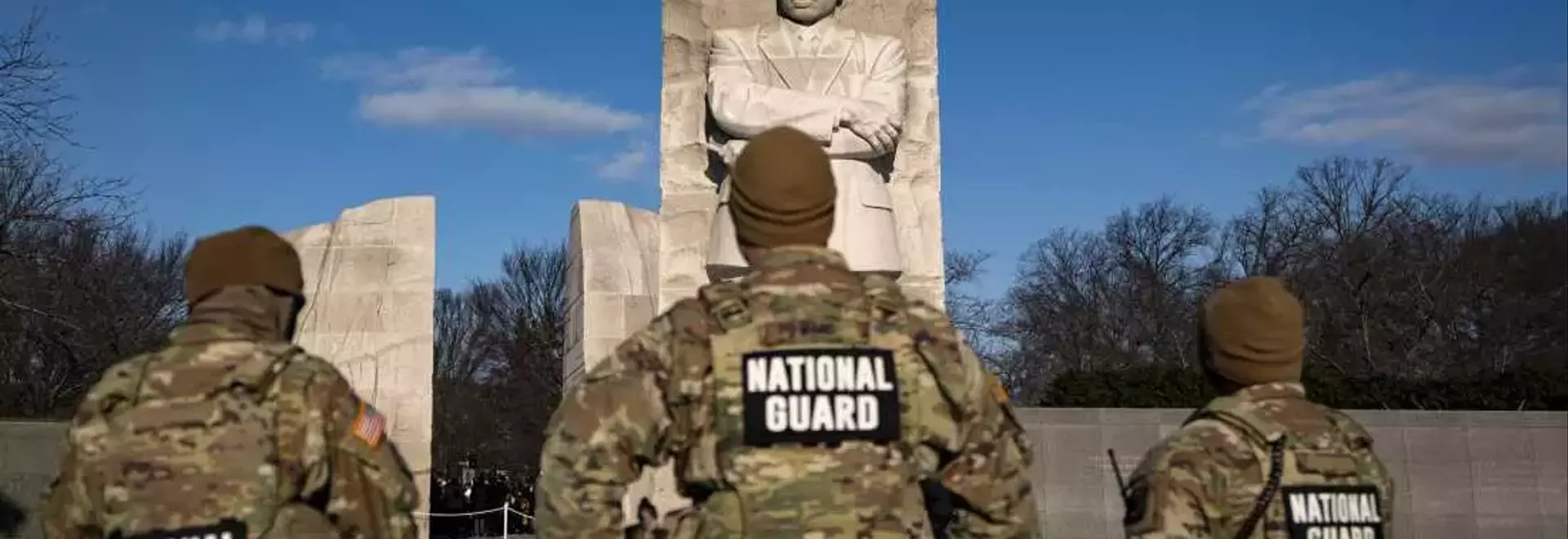
The Congressional Budget Office (CBO) has projected that the extensive deployment of the National Guard by President Trump could incur costs exceeding $1 billion in the current year, should these domestic operations persist. This figure comes after a period where the President's administration has made unprecedented use of the Guard, dispatching forces to various cities across the nation.

Initial deployments saw troops sent to six major urban centers, primarily in response to civil unrest, to manage crime, or to safeguard federal properties. While three of these deployments, in Los Angeles, Chicago, and Portland, have recently concluded, ongoing operations in Washington, D.C., Memphis, and New Orleans, alongside a contingent in Texas, continue to drain significant financial resources. The CBO's analysis, conducted at the behest of several senators, revealed that current deployment levels demand an additional $93 million monthly, with the D.C. presence alone, involving over 2,690 Guard members, potentially costing $660 million through December.

This substantial financial outlay has sparked debate among policymakers and budget analysts. Critics argue that these funds could be better allocated to essential public services like healthcare, housing, and education. Furthermore, questions have been raised about the efficacy of utilizing federalized Guard members for law enforcement duties, given their limitations in performing arrests or searches. Experts suggest that such military interventions are not a sustainable solution for crime reduction and that investing in local police forces would be a more judicious use of taxpayer money. Despite these concerns and a past Supreme Court ruling against certain deployments, the former President has consistently defended the necessity of these actions, claiming they enhance urban safety.

The extensive use of the National Guard for domestic operations represents a considerable financial commitment with broad implications. While the stated goal is often to maintain public order and safety, the economic burden and the debate over the most effective use of resources underscore the need for a comprehensive evaluation of such policies. Striking a balance between national security priorities and the judicious allocation of public funds remains a critical challenge for effective governance, encouraging thoughtful dialogue about alternative solutions that foster community well-being and fiscal responsibility.

More Articles
News
Mumbai's Coastal Haven: Life Along the Arabian Sea Promenade
Mumbai, a bustling metropolis with over 18 million inhabitants, finds its respite along the scenic promenades bordering the Arabian Sea. This article captures a fleeting moment on the Carter Road promenade, showcasing diverse daily activities and highlighting how residents carve out personal space amidst the city's density. It beautifully illustrates the unique charm of Mumbai's vibrant public life.
By Christianne AmanpourJan 28, 2026
News
Rural Health Transformation: A $50 Billion Initiative
The U.S. government has launched a $50 billion program to revitalize rural healthcare. This five-year initiative, the Rural Health Transformation Program, aims to address disparities in life expectancy between rural and urban areas. States are receiving funds based on various factors, including their rurality and alignment with administration priorities. While hailed as a significant investment, critics argue it may not offset concurrent cuts to Medicaid and Obamacare.
By Christianne AmanpourJan 28, 2026
News
California Steps Up Global Health Engagement Amidst US Withdrawal from WHO
As the US federal government withdraws from the World Health Organization, California is taking a proactive stance in global health. The state has become the first to join WHO's Global Outbreak Alert & Response Network (GOARN), aiming to enhance its preparedness for infectious disease threats. This move reflects a broader trend of states addressing public health responsibilities independently, ensuring continued access to international health intelligence and collaboration.
By Mona ChalabiJan 28, 2026
News
Teaching in the AI Age: An Analog Approach to English Education
A high school English teacher in Fort Worth has adopted an analog teaching method, eschewing AI and digital tools in her classroom. She emphasizes handwriting, journaling, and a process-oriented grading system to foster critical thinking and genuine engagement with literature among her students, believing this approach better equips them with fundamental skills than reliance on AI.
By Katty KayJan 28, 2026
News
Upcoming Transformation for Psychiatric Diagnosis Guide
The Diagnostic and Statistical Manual of Mental Disorders (DSM), often called the 'Bible of psychiatry,' is slated for a significant update. The American Psychiatric Association (APA) plans to transform the DSM into an online 'living document' to allow for more frequent updates reflecting scientific advancements. This new approach aims to incorporate insights into mental disorder causes, biological markers, and diverse 'lived experience' perspectives, moving beyond its traditional print format and revision cycle. The APA has published five studies outlining this strategic shift.
By Mona ChalabiJan 28, 2026