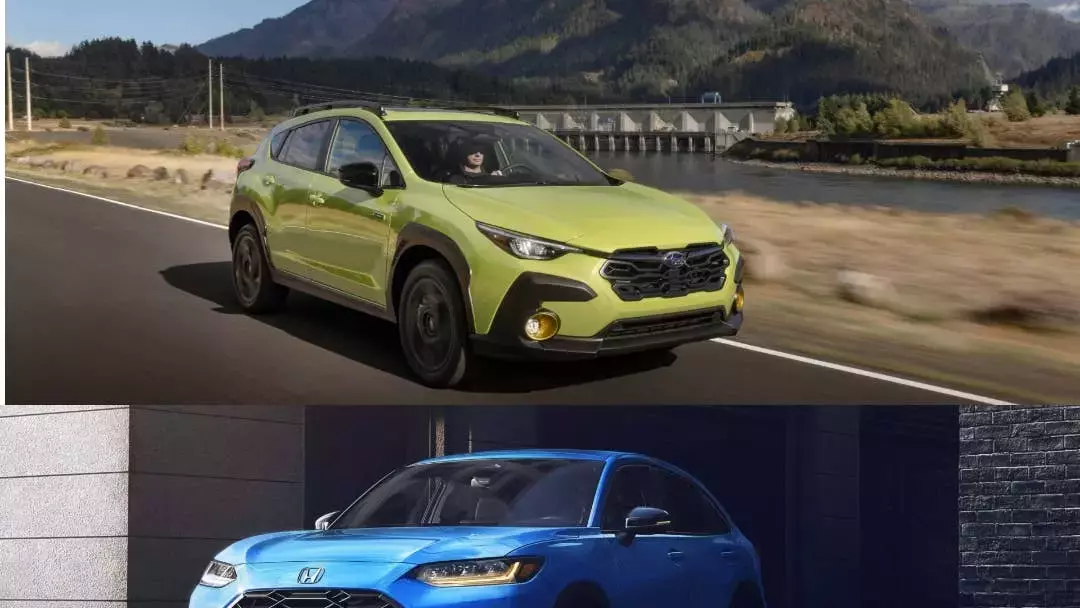
Cargo Showdown: Honda HR-V vs. Subaru Crosstrek
Cars

Cargo Showdown: Honda HR-V vs. Subaru Crosstrek

authorBy Akira Maruta
DateJul 25, 2026
Read Time2 min

When evaluating subcompact crossovers, discerning the nuances of cargo space can be a crucial factor, subtly distinguishing one model from another. The Honda HR-V and Subaru Crosstrek represent two distinct philosophies within this segment; Honda prioritizes expansive interior volume and urban practicality, whereas Subaru focuses on robust all-weather traction and adventurous capabilities.

A detailed examination of their specifications reveals that while both vehicles are similarly priced, their core missions diverge significantly. The HR-V, with its 2.0-liter four-cylinder engine delivering 158 horsepower, offers a smooth yet unhurried driving experience, ideal for city and suburban commuting. Its composed handling and quiet cabin contribute to a refined ride that feels more akin to a tall hatchback. In contrast, the Crosstrek provides engine options, including a more potent 2.5-liter flat-four generating 182 horsepower, paired with standard symmetrical all-wheel drive. This setup, combined with its impressive 8.7 inches of ground clearance and X-Mode system, positions the Crosstrek as a more capable choice for light off-road excursions and challenging winter conditions. Although both vehicles prioritize efficiency, achieving fuel economy in the high 20s to around 30 mpg combined, the Crosstrek's larger engine option offers a noticeable boost in acceleration for highway driving.

The critical difference in cargo utility lies in the space available with the rear seats in use. The HR-V boasts 24.4 cubic feet behind the second row, a substantial advantage over the Crosstrek's 20.0 cubic feet. This additional four cubic feet in everyday configuration makes the HR-V considerably more practical for transporting groceries, luggage, or gear with passengers onboard. However, when the rear seats are folded flat, the maximum cargo capacities become remarkably similar: the HR-V offers 55.1 cubic feet, closely followed by the Crosstrek's 54.7 cubic feet. The HR-V also provides a slightly more spacious rear passenger compartment, while the Crosstrek's squarer rear design better accommodates bulky outdoor equipment. Ultimately, the choice hinges on individual priorities: the HR-V caters to those who value interior roominess and urban comfort, while the Crosstrek appeals to buyers seeking standard all-wheel drive and off-pavement readiness, demonstrating that a vehicle's value is best measured against its intended purpose and the lifestyle it supports.

More Articles
Cars
2001 Sports Sedan Comparison: A Retrospective on Automotive Excellence
This article revisits a comprehensive comparison test from 2001, featuring a diverse lineup of luxury sports sedans. Models from Audi, BMW, Lexus, Mercedes-Benz, Saab, and Volvo were meticulously evaluated to determine their standing in a highly competitive automotive segment. The comparison highlights the engineering philosophies and performance benchmarks prevalent at the turn of the millennium, offering insights into the defining characteristics of these iconic vehicles.
By Chris HarrisJul 25, 2026
Cars
Rare 1998 Alpina B10 V8 Sedan with 75,000 Miles Heads to Auction
A highly coveted 1998 Alpina B10 V8 sedan, a limited-edition model (number 368 of approximately 850) initially sold in Japan, is now available for auction without reserve in the US. This unique vehicle, boasting a blue exterior and gold pinstripes, is powered by a specially modified 4.6-liter V8 engine from Alpina. With 75,000 miles (121,000 km) and extensive maintenance records, it offers enthusiasts a distinctive opportunity to acquire a 'golden-era' Alpina. Early bids currently sit at $20,000, with an estimated fair value between $30,000 and $45,000.
By Edward LohJul 25, 2026
Cars
Walmart Offers Significant Discount on E-Bike Suitable for Taller Riders
Walmart is currently featuring a substantial discount on the Dierttier Fat Tire Electric Bike, reducing its price by 43%. This e-bike is particularly noteworthy for its ability to comfortably accommodate riders ranging from 5-foot-7 to 6-foot-7, addressing a common challenge for taller individuals seeking electric bicycles. Beyond its size inclusivity, the bike boasts a powerful 1000W motor, a long-lasting 48V 17.5Ah lithium-ion battery, and a top speed exceeding 30 mph, making it a versatile option for various commutes and recreational rides.
By Brock YatesJul 25, 2026
Cars
Roadblocks for Impaired Driving Prevention Technology in New Cars
The 2021 Infrastructure Investment and Jobs Act mandated new vehicles to include advanced technology to prevent impaired driving. However, the required technology, which passively detects impairment without a breathalyzer, does not yet exist. This has led to pushback from automakers and lawmakers who cite concerns over false readings and civil liberties. The implementation by the 2028 model year is highly unlikely, prompting annual reports from NHTSA to explain the ongoing delays.
By Chris HarrisJul 25, 2026
Cars
Volvo EX60's Range Boost: Still Behind BMW iX3
Volvo's 2027 EX60 P10 AWD electric SUV now boasts an official EPA range of 330 miles, a slight improvement over initial estimates. However, it still lags significantly behind BMW's iX3, which offers up to 434 miles, intensifying the competition in the premium electric SUV market. Wheel size notably impacts range, with larger wheels reducing the overall distance.
By Michele AcquaragiaJul 24, 2026