Cadillac Discontinues Torque-Based Badging on 2027 Models
Cadillac is revamping its vehicle badging strategy, announcing the discontinuation of numerical identifiers that previously denoted torque output. This change, effective with the 2027 model year, marks a significant shift in how the luxury automaker visually communicates its vehicles' performance capabilities. The initial rollout of these torque-based badges in 2020 aimed to simplify power comparisons for customers, yet their reliance on newton-meters and subsequent rounding often complicated rather than clarified the information.
For a period of six years, Cadillac adorned the rear of its vehicles with numerical badges, such as '350' for lower-powered four-cylinder models and '1000' for the electric Escalade IQ, to represent their approximate torque figures in newton-meters. This system, however, proved to be less intuitive than anticipated for many, as the automotive industry predominantly uses pound-feet for torque measurements in certain markets, and Cadillac's liberal rounding practices further obscured the precise meaning behind the numbers. The company's decision to move away from this nomenclature indicates an acknowledgment of these challenges and a desire for a more streamlined approach to branding.
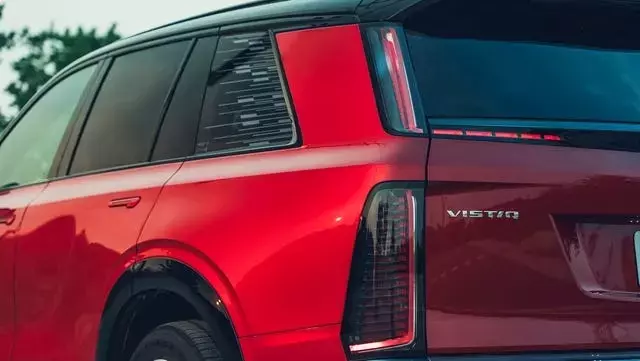
The upcoming 2027 Cadillac Vistiq, an electric SUV, is confirmed to be among the first models to reflect these alterations. Its '900' badge, symbolizing its torque rating, will be removed, aligning with the brand's new directive. Additionally, the Vistiq's distinctive 'Mondrian' graphic, located on its rearmost side window, will also be eliminated. While the numerical badges are being phased out across the board, specific designations like 'E4' for electric all-wheel-drive powertrains and 'T' for turbocharged gasoline models will persist, ensuring that key performance attributes remain identifiable.
This strategic rebranding extends beyond mere aesthetics, signifying Cadillac's continuous evolution in response to market feedback and its own internal assessment of brand messaging. The removal of the torque-based badges aims to simplify the vehicle identification process for consumers, allowing them to focus on other design elements and performance indicators that are perhaps more universally understood or less prone to misinterpretation. The shift suggests a move towards clearer, more direct communication regarding vehicle specifications, adapting to a diverse global audience and an increasingly electrified product lineup.
Ultimately, Cadillac's decision to abandon its torque-centric numerical badges for the 2027 model year and beyond reflects a commitment to refining its brand identity and enhancing clarity for its customer base. This adjustment, along with other subtle design modifications, indicates a forward-looking strategy that prioritizes consumer understanding and a more intuitive representation of its vehicles' attributes in an evolving automotive landscape.
