Bridging Science and Fiction: Wormholes in 'Stranger Things'
The Netflix series 'Stranger Things' has masterfully integrated complex scientific concepts, particularly wormholes, captivating its audience while also reflecting genuine scientific principles. In a memorable scene, science educator Scott Clarke endeavors to enlighten his class about wormholes. A bright student, Erica, articulately describes wormholes as conduits enabling matter to traverse galaxies or dimensions without spanning the intervening void. This scene not only serves the narrative of the series, which is set in a fictional town intertwined with a supernatural realm, but also pays homage to the 1980s aesthetic, while rooting its fantastical elements in the foundational theories of Albert Einstein.
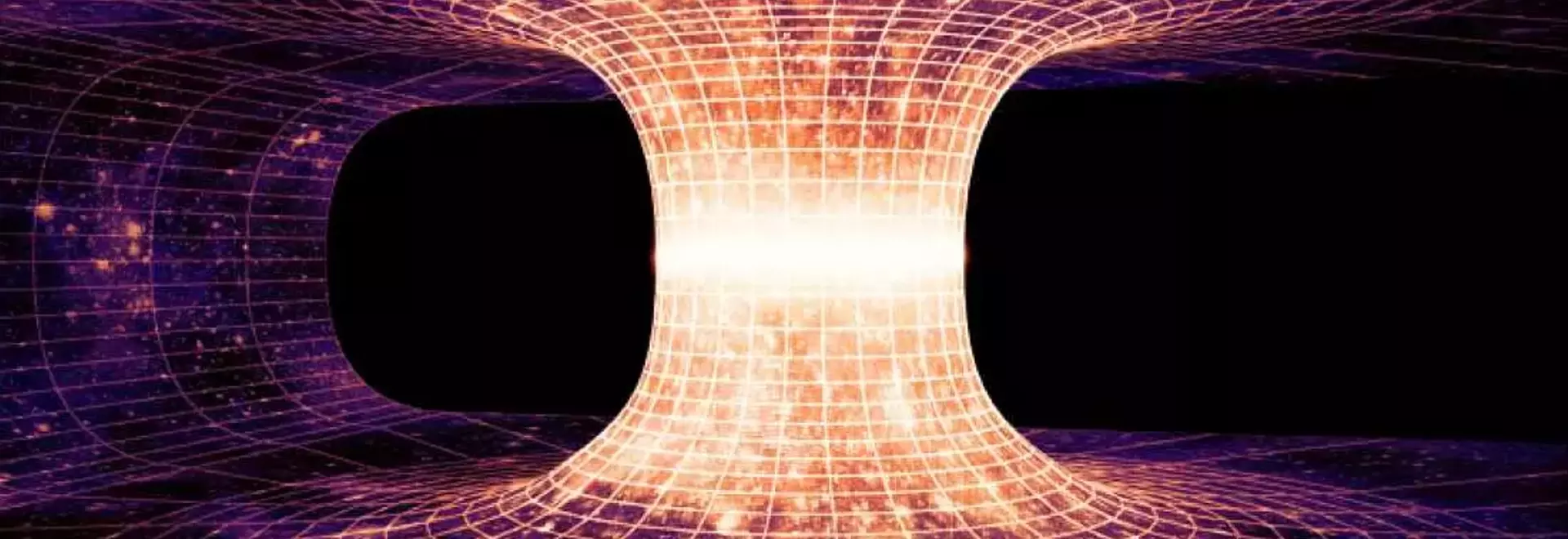
Originating from Einstein's General Theory of Relativity, the concept of wormholes, initially termed Einstein-Rosen bridges, posited a mathematical solution for tunnels connecting distant points in spacetime. Theoretical physicists, such as Sean Carroll from Johns Hopkins University, continue to explore wormholes as valuable theoretical models. These cosmic shortcuts have long been a favorite device in science fiction, appearing in works by Carl Sagan and 'Star Trek', allowing for imaginative space and time travel. While their real-world existence remains purely theoretical due to practical challenges like the requirement for exotic matter to stabilize them, their conceptual utility in physics for studying phenomena like quantum entanglement is undeniable.
The interplay between pop culture and theoretical physics regarding wormholes has fostered a unique symbiotic relationship. Physicist John Archibald Wheeler popularized the term 'wormhole' in 1957, and its integration into popular narratives, like 'Contact', propelled it into public consciousness. This cultural prevalence has, in turn, inspired physicists to delve deeper into these theoretical constructs. Despite the widespread acceptance of wormholes in fiction, debates persist within the scientific community regarding their portrayal. A recent controversy surrounding a holographic wormhole experiment with Google's quantum computer chip highlighted the potential for public misunderstanding when scientific characterizations are overly sensationalized. However, educators like Carsten Welsch from the University of Liverpool leverage the show's popularity to engage students with physics, demonstrating how 'Stranger Things' presents rich opportunities to discuss scientific principles, including antimatter, through its 'Upside Down' dimension.
Ultimately, 'Stranger Things' illuminates how popular culture can serve as an accessible entry point for complex scientific ideas, inspiring curiosity and fostering a deeper appreciation for the mysteries of the universe. By depicting characters who use their scientific acumen to confront extraordinary challenges, the series champions the power of intellect and exploration. This blend of entertainment and education encourages audiences, particularly younger generations, to engage with scientific inquiry, proving that intellectual heroes can indeed save the world, even if wormholes remain in the realm of theory for now.
