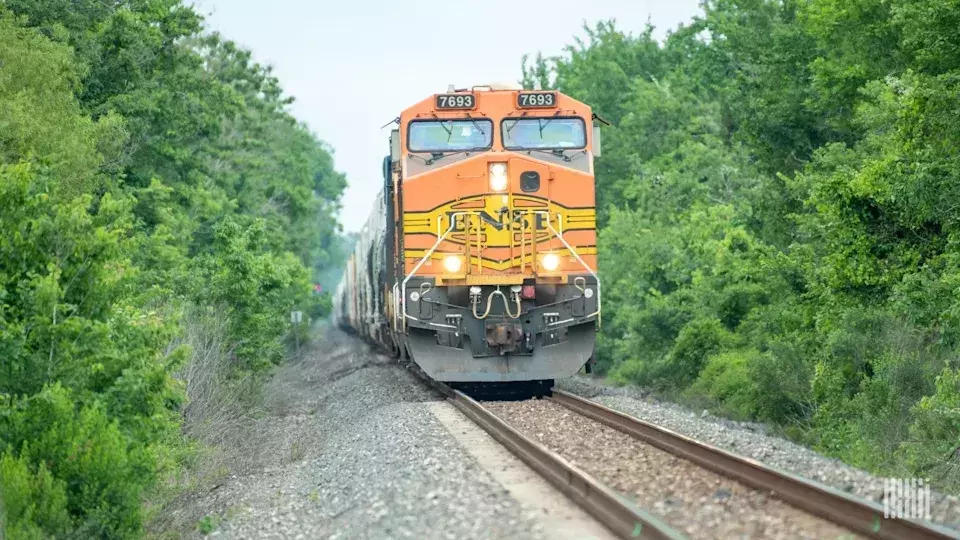
BNSF CEO Criticizes Proposed Rail Merger, Citing Concerns Over Rate Hikes and Market Domination
Money

BNSF CEO Criticizes Proposed Rail Merger, Citing Concerns Over Rate Hikes and Market Domination

authorBy Chika Uwazie
DateJul 29, 2026
Read Time3 min
The railway industry is currently facing a significant debate regarding a proposed merger between two major players, Union Pacific and Norfolk Southern. This article delves into the strong objections raised by BNSF's CEO, Katie Farmer, who argues that the merger, if approved, would have detrimental effects on competition, shipping rates, and ultimately, consumer prices.

Merger Mayhem: BNSF CEO Sounds Alarm on Rail Consolidation's Impact

BNSF's Stance on the Union Pacific-Norfolk Southern Merger Application

BNSF's chief executive, Katie Farmer, expressed profound skepticism regarding the recent regulatory submission for the merger involving Union Pacific and Norfolk Southern. She asserted that the latest filing by the two carriers does not alter the fundamental concern that this consolidation will inevitably result in increased costs for freight transportation and elevated prices for end consumers.

Analyzing the Supplemental Filing and Unchanged Concerns

On Tuesday, Farmer released a statement detailing BNSF's ongoing review of the additional information provided at the Surface Transportation Board's request concerning the proposed merger. She highlighted that despite this being the fourth attempt by Union Pacific and Norfolk Southern to present a comprehensive application, the core issues remain unaddressed. Farmer emphasized that the proposal still lacks a credible explanation of how uniting two significant railway operators into a single entity would preserve, let alone enhance, market competition, a key requirement under the STB's merger guidelines.

Criticism of the Proposed Concessions and Market Impact

Farmer further elaborated on her concerns, noting that the merging companies have introduced what they describe as new elements in their application. However, she characterized these as merely reiterations of previous proposals, featuring numerous limitations that are often difficult to comprehend, accessible to a very limited number of clients, and only for brief durations. She firmly stated that these proposed concessions do little to counteract the substantial anti-competitive consequences of a single company controlling a 50% market share.

The Alarming Scale of the Combined Entity's Market Share

According to data from Railfax, the merged Union Pacific-Norfolk Southern entity would command approximately 37% of North American rail traffic. Furthermore, their recently announced operational alliance with Canadian National would add another 13% to their total market share, leading to a dominant position in the industry.

Scrutiny of the Committed Gateway Pricing Proposal

Farmer specifically criticized the expansion of their Committed Gateway Pricing (CGP) proposal. She pointed out that this initiative would only be available to about 1% of rail shipments, would be temporary, and, as explicitly stated in Union Pacific and Norfolk Southern's application, would likely lead to higher rates for most shippers who utilize it. Farmer concluded that Union Pacific's claims of preserving competition and safeguarding rail customers through this mechanism are simply not credible.

The Geographic Scope and Economic Repercussions of the Merger

These critical gateways include crucial interchange hubs such as Chicago, St. Louis, and the Mexican border. Farmer concluded her statement by asserting that the supplementary data submitted by Union Pacific does not alter the reality that this merger represents an anti-competitive transaction between two financially robust companies. Such a merger, she warned, would diminish competitive choices, increase rates for rail customers, result in higher prices for consumers, and ultimately cause significant harm to the American economy and the broader supply chain.

More Articles
Money
Qualcomm's Strategic Shift: Navigating Smartphone Market Headwinds and Powering AI Data Centers
Qualcomm is set to release its Q3 earnings, offering insights into how the AI-driven memory shortage is impacting smartphone sales and the company's progress in its data center initiatives. The company aims to reduce its reliance on the slowing handset market by expanding into AI data centers, with ambitious revenue projections for this new segment, even as the smartphone industry faces significant declines.
By Ramit SethiJul 29, 2026
Money
Apple Challenges UK's App Store Payment Rules, Citing Price Regulation Concerns
Apple has voiced strong opposition to proposed UK regulations targeting its App Store's in-app payment system, arguing that these changes amount to price control and could stifle innovation. The company submitted its concerns to the Competition and Markets Authority (CMA), emphasizing that allowing external payment options would give the regulator undue influence over its business model. Meanwhile, app fairness advocates contend that Apple's current practices create unfair barriers for developers.
By Bola SokunbiJul 29, 2026
Money
Stellantis's Mid-Year Financial Performance and Strategic Reorientation Under Scrutiny
Stellantis, the automotive giant behind brands like Ram, Jeep, and Fiat, is set to unveil its first-half financial results. The market is keenly watching CEO Antonio Filosa's turnaround strategy, particularly after competitors like Ford and GM raised their full-year profit forecasts. The company's recent sales figures indicate a positive trend, largely driven by strong performances in North America and Europe, and its strategic 'FaSTLAne 2030' plan aims to streamline investments into core global brands while addressing vehicle affordability.
By Natalie PaceJul 29, 2026
Money
Reddit (RDDT) Stock: Buy Before Earnings or Justified Sell-off?
Reddit's stock has seen a significant downturn, particularly following news of potential friction in its data licensing deal with Google. Despite robust growth in revenue, EPS, and user engagement since its 2024 IPO, concerns linger about the sustainability of its data business and the impact of AI-powered search on referral traffic. With second-quarter earnings approaching, the market is divided on whether its current valuation reflects its strong fundamentals or the perceived risks associated with its relationship with Google.
By Natalie PaceJul 29, 2026
Money
Grayscale: Hyperliquid's HYPE Token Presents Undervalued Opportunity Amidst Crypto Giants
Grayscale Research indicates that Hyperliquid's HYPE token is significantly undervalued compared to established fintech and crypto firms like Coinbase, Robinhood, and Circle. The analysis, which applies an equity-style framework, projects strong earnings growth for Hyperliquid through 2027, driven by increased trading volumes and a new stablecoin revenue stream. Despite this positive outlook, the token trades at a considerably lower earnings multiple, suggesting a potential buying opportunity for investors.
By Chika UwazieJul 29, 2026