Betye Saar's Wearable Art: A Century of Creativity
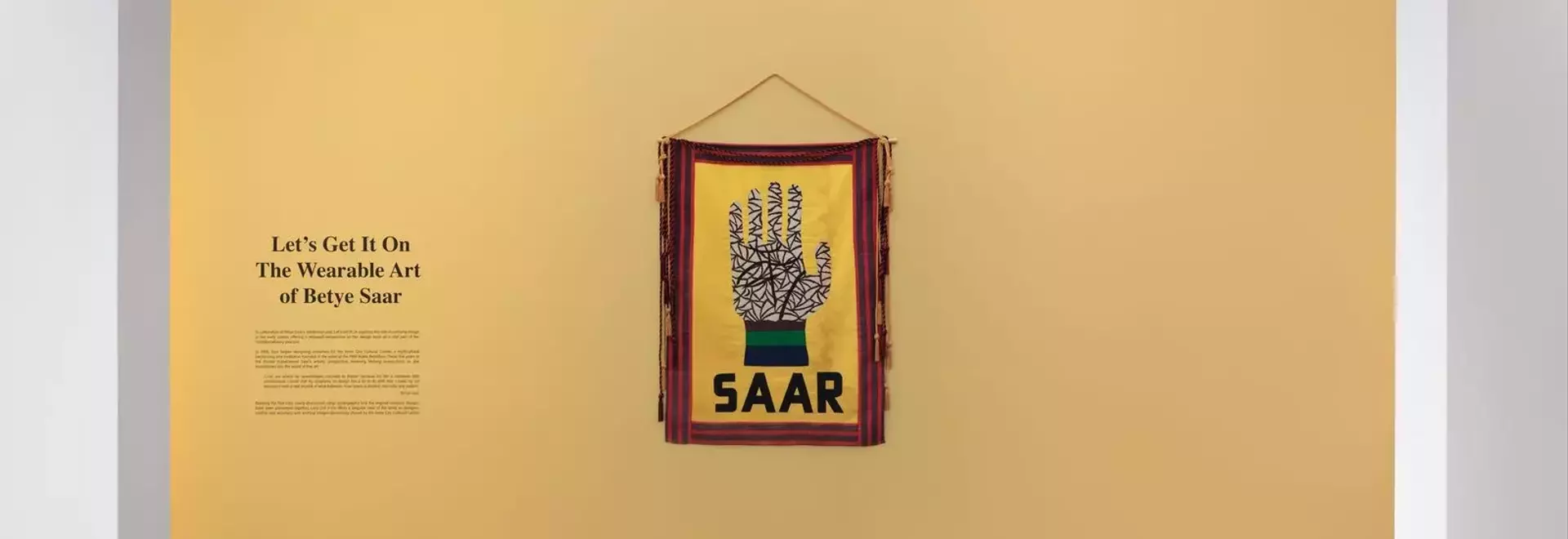
The artistic journey of Betye Saar, a pivotal figure in the West Coast Black Arts movement, is being honored with a captivating exhibition, "Let's Get It On: The Wearable Art of Betye Saar." This collection provides an insightful look into a less-explored but foundational era of Saar's prolific career, highlighting her work in costume design and various crafts. Marking her centennial, the exhibition features a rich array of over 200 pieces, including clothing, accessories, theatrical artifacts, and photographic documentation. It recontextualizes these creations not as peripheral efforts but as the essential groundwork that informed and inspired her celebrated assemblage art. Saar's early experiences as a designer and craftsperson, spanning from the 1950s through the 1970s, were crucial in shaping the distinctive visual language that would later define her transformative contributions to contemporary art.
Saar's early life and artistic development were profoundly influenced by her family's crafting traditions and her exposure to transformative art. Growing up with a seamstress mother and grandmothers skilled in china painting and quilting, Saar inherited a deep appreciation for handcraft. This upbringing instilled in her a habit of repurposing materials, a practice she later perfected into an artistic philosophy. Her encounters with Simon Rodia's Watts Towers, which transformed discarded items into monumental art, further cemented her perspective on the potential of found objects. During her time designing for Los Angeles's Inner City Cultural Center, Saar honed her skills in improvisation and creative problem-solving, crafting costumes from limited resources. These experiences, combined with her discovery of Joseph Cornell's boxed assemblages, catalyzed her shift towards more politically charged work following significant societal events. Ultimately, these diverse experiences coalesced, allowing her to develop her unique artistic voice, using art as a powerful tool for expression and social commentary.
The Foundational Years: Design, Craft, and the Genesis of an Artistic Vision
The exhibition "Let's Get It On" delves into the period from the 1950s to the 1970s, showcasing Betye Saar's life as a designer before she fully embraced her identity as an assemblage artist. During these decades, Saar meticulously raised her three daughters in Laurel Canyon while simultaneously pursuing a multifaceted creative career. She designed costumes for groundbreaking productions at the Inner City Cultural Center in Los Angeles, taught various crafts, and created greeting cards and enamel objects to supplement her income. She also designed and sewed clothing for her loved ones, demonstrating her innate design sensibilities. Saar herself initially viewed her work during this time not as fine art but as design, suggesting a pragmatic approach to her craft. However, this period was instrumental in the subtle development of the visual lexicon that would later become synonymous with her revolutionary contributions to contemporary assemblage art.
Saar's unique approach to art-making, characterized by her ability to transform everyday materials into profound artistic statements, was deeply rooted in her early experiences. Her upbringing by a seamstress mother and grandmothers who painted china and made quilts instilled in her a profound appreciation for handcraft and the imaginative use of resources, particularly during the economic hardships of the Depression era. This background cultivated a mindset of resourcefulness, where nothing was discarded but rather awaited a new purpose. Her early encounters with the Watts Towers reinforced the idea that discarded objects could be transformed into something monumental and magical, fostering a lifelong habit of collecting and repurposing. Working within the constraints of theater costume design at the Inner City Cultural Center further sharpened her improvisational skills, pushing her to innovate with limited budgets and found materials. These cumulative experiences were not mere detours but integral steps in her evolution, refining her distinctive artistic voice and laying the groundwork for her later, influential assemblage works that would challenge conventions and provoke thought.
From Wearable Art to Symbolic Assemblages: A Continuum of Creative Expression
The exhibition vividly illustrates the seamless progression of Betye Saar's artistic practice, demonstrating how her early work in fashion, collage, and costume design directly informed her later, renowned fine art assemblages. Her costume renderings for productions like "West Side Story" and "Burlesque Is Alive" are presented alongside archival photographs, revealing her fluid movement between artistic disciplines. These designs, rich with feathers, sequins, and sheer fabrics, not only transformed performers but also served as early expressions of her aesthetic. By the time she designed for "Antigone," her sketches had already begun to resemble collages, incorporating botanical motifs, patterned papers, and textured scraps, effectively blurring the lines between functional design and artistic composition. This period highlights how her practical engagement with wearable art was a continuous journey of discovery, where each creative endeavor, irrespective of its medium, contributed to the development of her distinctive symbolic language and her eventual mastery of assemblage.
Saar's creative philosophy, deeply rooted in the idea that "all of life is art," is evident in her continuous evolution and reinvention. Her Laurel Canyon home and studio serve as a living archive, filled with beads, fabric scraps, found objects, and celestial charms, all awaiting their artistic reincarnation. This commitment to repurposing is exemplified by the anecdote of a polka-dot fabric from a 1960s blouse resurfacing in a later artwork, illustrating her enduring connection to materials and memories. The exhibition itself mirrors this philosophy, bringing together fragments from decades of her life, friendships, and family histories to construct a comprehensive narrative of her artistic development. Her distinctive symbolic vocabulary, characterized by moons, stars, eyes, and protective objects, became increasingly prominent, stitched into leather "mojo" belts and necklaces. Even in her later years, Saar continues to create, now exploring watercolors, demonstrating that for her, the act of making art is an ongoing, fluid process, free from external pressures and driven purely by her intrinsic desire to create and express.
