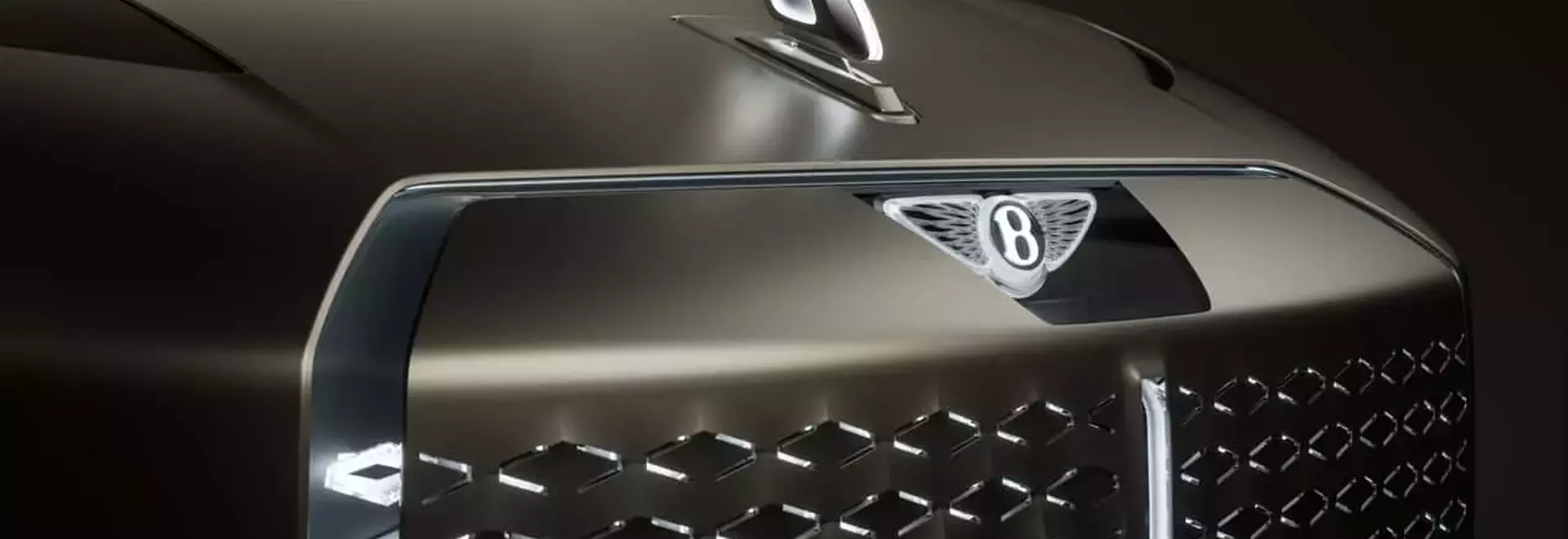
Bentley's Sustained Profitability Amidst EV Transition
Cars

Bentley's Sustained Profitability Amidst EV Transition

authorBy Jeremy Clarkson
DateMar 17, 2026
Read Time2 min

Bentley, the esteemed automotive manufacturer, has demonstrated remarkable financial resilience, securing its seventh consecutive year of profitability. This achievement comes despite a challenging market landscape in 2025, marked by a 4.8 percent decrease in sales, totaling 10,131 units. The brand navigated headwinds such as US tariffs and a shrinking market in China by strategically focusing on high-margin offerings from its Mulliner bespoke division and robust demand for its high-performance Speed variants. This approach enabled the company to limit its revenue decline to a mere one percent year-over-year, reaching €2.6 billion (approximately $3 billion).

Furthermore, Bentley's commitment to innovation is evident in its substantial investments towards an electric future. The company is actively developing its first electric vehicle, setting up a new design center, and upgrading its paint shop to offer a wider array of customization options. While the ambitious 2030 target for a fully electric lineup has been revised, Bentley remains dedicated to an all-electric future, planning to introduce a new plug-in hybrid or EV annually until 2035. However, this transformative period also necessitates operational adjustments, including a planned reduction of up to 275 roles in management and non-manufacturing sectors to streamline costs and support future product development.

Bentley's journey reflects a dynamic response to evolving industry demands, balancing heritage with innovation. By prioritizing premium customization and embracing electrification, the company not only safeguards its financial stability but also carves a path toward a sustainable and cutting-edge future in luxury mobility. This strategic foresight ensures Bentley remains a formidable force in the high-end automotive sector, continuously adapting and thriving.

More Articles
Cars
2027 Kia Telluride Hybrid Revealed with Significant Updates
Kia is introducing a redesigned Telluride three-row SUV for the 2027 model year, featuring a notable addition: a hybrid powertrain option. This second-generation model boasts an entirely new exterior design, a slightly enlarged chassis, and offers various trim levels including EX, SX, and SX Prestige, along with optional X-Line packages.
By Brock YatesMar 17, 2026
Cars
2027 Kia Telluride Hybrid: Interior Overview
The 2027 Kia Telluride Hybrid introduces a completely revamped interior, emphasizing spaciousness and advanced technology. This new iteration of the SUV offers a hybrid powertrain and an array of sophisticated features designed to enhance passenger comfort and driver experience.
By Chris HarrisMar 17, 2026
Cars
Bentley's EV Strategy Shift: A Glimpse into Future Mobility
Bentley's electrification strategy is undergoing a significant shift. While its first EV SUV is still on track for a 2027 launch, plans for subsequent electric models are delayed until at least 2030 due to the discontinuation of the VW Group's Scalable Systems Platform (SSP). The luxury automaker will instead focus on plug-in hybrids and even explore a return to exclusive gasoline-powered vehicles, alongside a next-generation Bentayga with a new PHEV setup.
By Brock YatesMar 17, 2026
Cars
Bentley's Electric Leap: The Urban SUV Forges a New Path
Bentley is set to introduce its inaugural all-electric vehicle, an 'Urban SUV,' by the close of the year. This move signifies the luxury automaker's firm commitment to electrification, with no plans to offer internal combustion engine variants. The vehicle, built on the VW Group's PPE platform, aims to attract a new clientele while maintaining Bentley's esteemed legacy, promising impressive charging capabilities.
By Dan NeilMar 17, 2026
Cars
Peugeot Introduces New Turbo 100 Engine Amidst Evolving EV Landscape
Peugeot unveils its new 1.2-liter, three-cylinder Turbo 100 engine, featuring significant reliability improvements over its predecessor by replacing the wet belt with a timing chain. This move reflects a broader industry reality where internal combustion engines remain relevant despite the push for electrification, especially given current charging infrastructure and pricing challenges. The engine, offering 100 hp and 151 lb-ft of torque, is set to debut in the 208 supermini and 2008 crossover.
By Edward LohMar 17, 2026