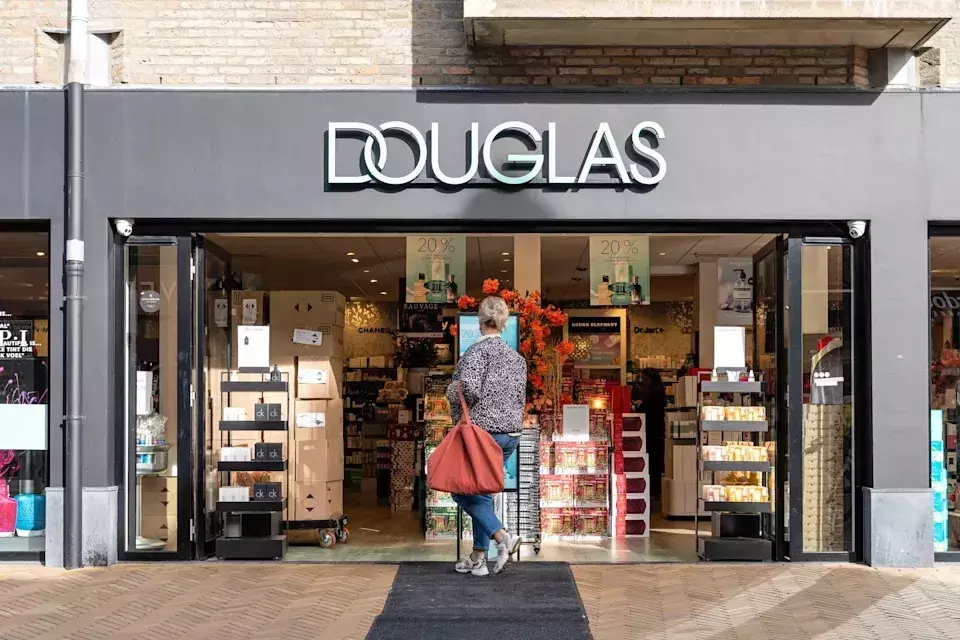
Beauty Retailer Douglas Adjusts Strategy Amid Store Closures and Market Shifts
A prominent beauty retail chain is significantly scaling back its physical store footprint following years of aggressive expansion. This strategic shift is a direct response to declining sales figures and intense competitive pricing, compelling the company to reassess the necessity of its extensive network of physical locations.
This transformation is unfolding as the beauty market continues to be reshaped by the increasing dominance of online shopping and consumers' heightened sensitivity to pricing. The retailer has already shuttered numerous outlets this fiscal year, and its leadership has indicated a continuing review of all locations based on their profitability and customer traffic metrics.
Douglas Group, established in 1821, is a German-headquartered international beauty conglomerate. It operates approximately 1,970 stores across Europe and manages several e-commerce platforms, encompassing various brands like Douglas, Nocibé, Parfumdreams, and Niche Beauty. The company recently announced the closure of 31 stores in the first three quarters of fiscal year 2026, a substantial increase compared to the 12 closures reported in the corresponding period of the previous year. Douglas' CEO, Sander van der Laan, stated that while there's no fixed number for future closures, the company will continue to scrutinize its store network to adapt its physical presence to evolving consumer behaviors and market conditions, with an emphasis on e-commerce and the profitability of its physical locations. The company plans selective store openings, particularly in Eastern Europe, and will modernize existing stores in Western Europe, anticipating a growing imbalance between physical and digital sales channels as more customers choose to shop online.
The company's decision to close stores is largely driven by a more challenging market environment in some of its key regions. Germany, France, and the Netherlands collectively represent about 60% of Douglas' business. However, the company observed a year-over-year decrease in consumer demand for premium beauty products in Germany and the Netherlands, and stagnation in France during the recent quarter. In contrast, Central Eastern Europe demonstrated more robust performance. Price competition is also a significant factor, with consumers in mature markets exhibiting high price sensitivity and the competitive landscape becoming increasingly aggressive. In response, Douglas is revising its pricing strategies and redirecting investments towards its digital offerings and a more comprehensive omnichannel shopping experience. Although e-commerce sales slightly declined in the last quarter, overall digital sales, excluding specific brands, showed a modest increase. Cross-channel services, such as Click & Collect Express, experienced notable growth, and the company's proprietary brands achieved double-digit sales growth.
Douglas is proactively reshaping its business model rather than merely shrinking. The company's focus remains on bolstering its e-commerce capabilities, promoting exclusive product lines, and enhancing omnichannel services, all while rigorously evaluating the profitability of its brick-and-mortar stores. Despite the recent challenges, Douglas has reaffirmed its financial outlook for the full fiscal year 2025/26. The latest financial reports underscore the intensified scrutiny of its store network, as physical store sales are declining faster than e-commerce growth, and consumer demand varies significantly across Europe. This indicates a clear strategic direction for the retailer: to establish a business that is increasingly centered on digital retail, complemented by a more carefully curated and selective physical presence that adapts to the evolving preferences of its customer base.
