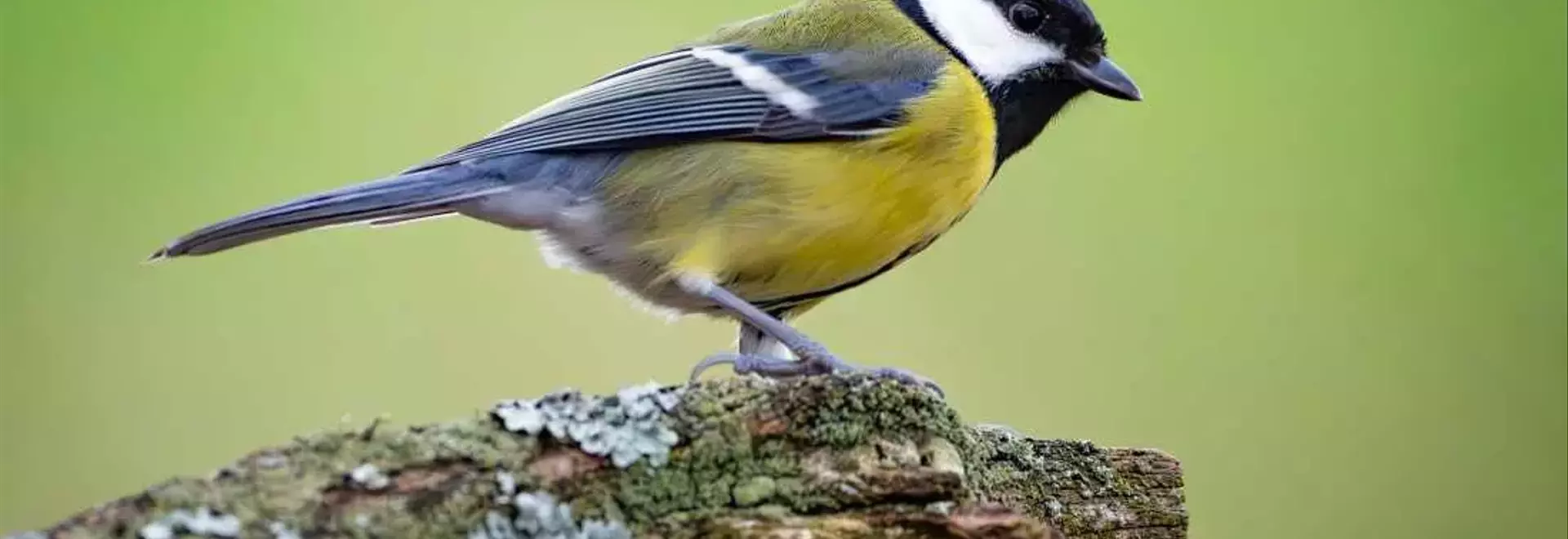
Avian Relationships: The 'Divorce' Phenomenon in Great Tits
Recent investigations into the social structures of Great Tits, common songbirds found across Europe, have unveiled a fascinating aspect of their pair-bonding: a phenomenon resembling 'divorce' among these avian partners. This groundbreaking research, conducted by scientists at the University of Oxford, indicates that not all bird couples maintain their bond between breeding cycles. While some pairs exhibit enduring loyalty, others opt for separation, subsequently seeking new mates for future nesting seasons. These findings underscore the intricate nature of social interactions within the animal kingdom, revealing that the complexities of relationships are not exclusive to human society.
Adelaide Abraham, a doctoral candidate at the University of Oxford and lead author of this compelling study, highlights the growing understanding of how profoundly social behavior impacts the lives of animals. She emphasizes its crucial role, stating that it holds immense significance in shaping their existence. The focus of Abraham's research centered on the Great Tit, a small songbird characterized by its yellowish plumage and a distinct black stripe on its chest, commonly found throughout Europe.
During the spring, these charming birds form pairs to raise their young. The male diligently provides sustenance to his female counterpart as she incubates the eggs. Once the chicks emerge, both parents collaboratively feed them, typically offering caterpillars and various other insects. However, when summer arrives and the offspring become independent, the parental responsibilities of the Great Tit couple come to an end. To ascertain the subsequent behavior of these pairs, Abraham and her team employed miniature radio transmitters to track individual birds within the forested areas near Oxford. These transmitters would emit signals whenever the birds frequented feeders strategically placed by the researchers throughout the woods.
As summer transitioned into autumn, the researchers observed that a considerable number of pairs continued to frequent the bird feeders together, maintaining their bond. Nevertheless, a distinct pattern emerged: other pairs began to drift apart. The researchers characterized this separation as 'divorce' in their paper, which was published in the esteemed journal Proceedings of the Royal Society B. Abraham pointed out that the birds destined for separation exhibited less association at the feeders from the outset, a trend that intensified as winter progressed. She humorously acknowledged the human tendency to connect with such avian 'breakups,' noting that many people remark on the predictability of such behavior, given their own experiences.
Despite the humorous parallels, scientists emphasize that such behavior is not a given in the avian world. Sarah Khalil, a postdoctoral associate at the Cornell Lab of Ornithology, remarked that the study could have easily shown no association between birds during the non-breeding season. It was equally plausible that entire flocks might randomly intermingle until the next spring mating season, or that former partners would continue to cooperate through winter before quickly finding new mates as temperatures rose. Instead, the observed behavior suggests that individual birds proactively detach from their previous partners and forge new relationships during the winter months.
Abraham clarifies that while the term 'divorce' is used, these birds aren't formally ending a legal union. Nevertheless, she asserts that the research unequivocally demonstrates the genuine presence of complex social dynamics within bird populations. She concludes by noting that there is significantly more "drama" unfolding within the flocks outside our windows than people typically realize, highlighting the hidden intricacies of avian social lives.
