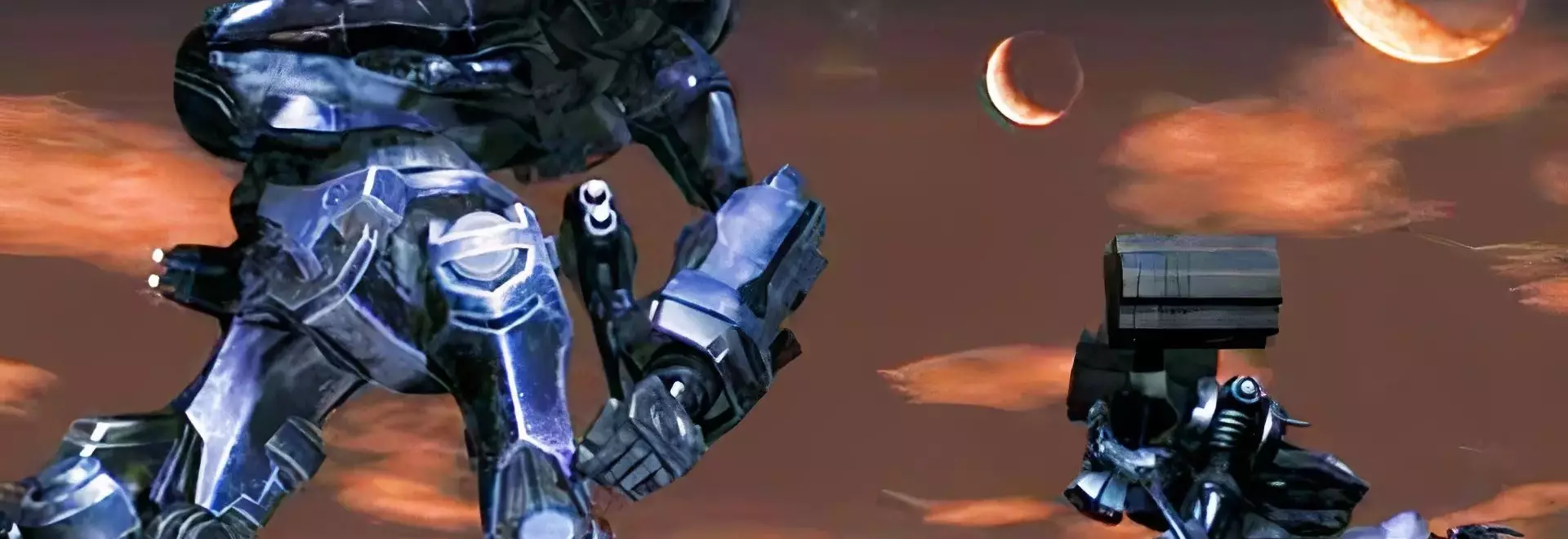
Armored Core 2: A Glimpse into the Evolution of Mech Combat
Master the Machine: The Enduring Legacy of Armored Core 2's Mechanical Ballet
Armored Core 2's Pioneering Role in Next-Gen Gaming
Launched on the PlayStation 2 in October 2000, Armored Core 2, despite being the fourth installment, was a significant milestone for the franchise. It represented a crucial transition into a new gaming era, attempting to balance the series' established intricate mechanical philosophy with the burgeoning capabilities of next-generation hardware. This period of evolution saw the game pushing boundaries, introducing enhancements that would shape the future of mech combat simulators.
Evaluating Armored Core 2 Against Its Successors
While Armored Core 2 expanded upon its PlayStation predecessors with enhanced visuals and a larger scope, it retained the challenging mechanical design that initially made the series a niche experience. It lacked the polished gameplay of Armored Core 3, the exhilarating pace of Armored Core: For Answer, and the mainstream appeal achieved by Armored Core 6: Fires of Rubicon. Yet, at its core, it delivered on the promise of a next-generation sequel, offering a deeper and more expansive experience.
Exploring the Martian Conflict: Narrative and Mission Structure
The game transports players to a dystopian Mars, where warring factions vie for control over planetary development. Players assume the role of mercenary Ravens, undertaking diverse missions for various clients. With approximately 30 missions, the game allows players to progress through the conflict, continually upgrading their Armored Core (AC) with an extensive array of weapons and parts. The familiar mission structure was amplified by an unprecedented scale, including 50 Arena opponents and split-screen multiplayer, all rendered with impressively detailed mech models for its time.
Unmatched Customization: The Heart of Armored Core 2's Appeal
The profound customization system remains the most compelling aspect of Armored Core 2. The game masterfully captures the fantasy of not just piloting a giant robot, but meticulously constructing one from countless modular components. Every adjustment in the garage, from weight distribution and energy consumption to mobility and weapon configurations, profoundly impacts the machine's performance. The true triumph of the game lies in the journey from initial experimentation to eventual mastery, where seemingly incompatible parts coalesce into a formidable and efficient combat unit.
Navigating the Awkwardness: Controls and Learning Curve
A primary criticism of Armored Core 2 was its unconventional control scheme, particularly its failure to fully adopt analog movement on the DualShock 2, a noticeable omission in 2000. Critics often highlighted the controls as a significant barrier, and even supporters acknowledged the steep learning curve compared to more intuitive mech games like Virtual-On. For seasoned players, this mechanical stiffness became an integral part of the game's charm, emphasizing the realism of piloting a complex machine. However, for newcomers, differentiating between deliberate mechanical depth and simply unwieldy controls proved to be a considerable challenge.
FromSoftware's Vision: Prioritizing Gameplay Over Cinematic Spectacle
Upon the PlayStation 2's release, the gaming industry largely gravitated towards cinematic visuals and elaborate spectacles. However, FromSoftware deliberately chose a different path for Armored Core 2. Studio founder Naotoshi Jin, alongside director Toshifumi Nabeshima, openly expressed skepticism about the industry's obsession with movie-like experiences. Jin famously stated in a 1999 interview that creating games like movies was a mistake, advocating for a focus on core gameplay mechanics.
A Precursor to Future Masterpieces: Enduring Design Philosophy
Instead of merely showcasing Sony's new Emotion Engine with flashy graphics, Armored Core 2 utilized the advanced hardware to reinforce its traditional design principles. Much like Hidetaka Miyazaki's later work with Demon's Souls on the PS3, producer Kenichiro Tsukuda delivered an unyielding experience that demanded players to delve into intricate systems, embrace failure, and dedicate extensive time to fine-tuning their machines in the hangar before engaging in combat. This commitment to deep mechanics, even if it meant challenging controls and visuals that have not aged gracefully, established a fundamental philosophy that would be perfected in future Armored Core titles, particularly Armored Core 6.
