Analyzing Berkshire Hathaway's Major Second-Quarter Investment in Alphabet (GOOG)
Money

Analyzing Berkshire Hathaway's Major Second-Quarter Investment in Alphabet (GOOG)

authorBy Scott Pape
DateAug 18, 2026
Read Time2 min

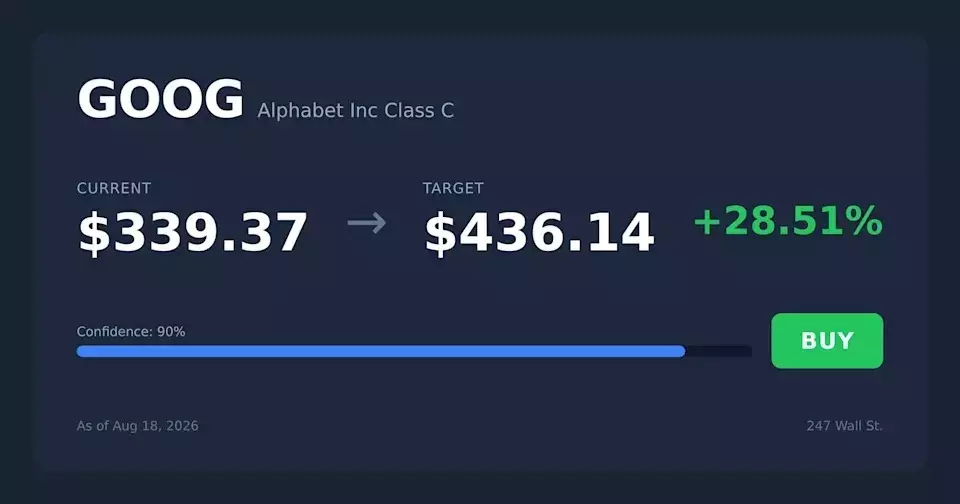
Berkshire Hathaway, under the guidance of its investment team, significantly increased its stake in Alphabet (GOOG) during the second quarter, adding $17 billion and elevating it to the third-largest position in its portfolio. This substantial investment highlights the perceived value of Alphabet's diverse operations, which include its dominant search engine, YouTube, and the rapidly expanding Google Cloud, a key player in the development of AI infrastructure. Despite the stock's impressive 69.03% gain over the past year, its current valuation, approximately 17 times trailing earnings, is considered attractive compared to many of its hyperscaler counterparts, prompting astute investors like Berkshire's team to act.

Alphabet's financial performance reinforces this positive outlook, with second-quarter 2026 revenue reaching $119.80 billion, marking a 24% growth rate. Google Cloud, in particular, demonstrated remarkable acceleration, achieving 82% growth and more than tripling its operating income to $8.8 billion. The company also boasts a robust Cloud backlog of $514 billion, indicating strong future revenue streams. Additionally, 90% of Fortune 100 companies are now utilizing Gemini Enterprise, showcasing the widespread adoption of Alphabet's AI solutions. The consensus among 63 analysts, with 57 rating the stock as a Buy or Strong Buy, further supports a bullish sentiment, projecting a 23% increase from its current trading price. However, some investors remain cautious due to increased capital expenditures, which doubled year-over-year to $44.92 billion in Q2, leading to a negative free cash flow of $5.86 billion and a temporary suspension of its buyback program.

Looking ahead, the trajectory for Alphabet's appreciation hinges on two critical catalysts in the coming quarters: the conversion of its massive Cloud revenue backlog and the revenue generation from TPU system sales. While the company faces challenges such as significant capital outlays for AI development and potential regulatory pressures, its current valuation at 17 times earnings, coupled with its 24% revenue compounding rate and 82% Cloud growth, represents a compelling opportunity. Investors should closely monitor Cloud operating margins and Search revenue growth in the third quarter for signs of continued strength, as these indicators will be crucial in validating Berkshire's strategic investment and shaping Alphabet's performance over the next year.

Investing in fundamentally strong companies with clear growth trajectories and sound management practices is a cornerstone of building lasting wealth. Berkshire Hathaway's recent move underscores the importance of recognizing undervalued assets and the potential for long-term gains when innovation meets solid financial performance. This approach encourages thorough research and a patient perspective, empowering individuals to make informed decisions that align with a vision of sustained growth and prosperity.

More Articles
Money
Life Couriers Under New Leadership Following Private Equity Acquisition
Life Couriers, a Munich-based logistics firm specializing in healthcare and temperature-controlled transport, has been acquired by JLL Partners. Edward DeMartini, formerly CEO of The Quick Group, has been appointed as the new CEO. This strategic move aims to bolster Life Couriers' expansion in the burgeoning healthcare logistics market, driven by increasing demand for specialized pharmaceutical and medical product transportation.
By Bola SokunbiAug 18, 2026
Money
Uber's Operational Strength Outshines Market Valuation, Says Pershing Square
Pershing Square Holdings highlights Uber Technologies, Inc. (NYSE: UBER) as a new position in its Q2 2026 investor letter. Despite a 12% year-to-date dip and concerns over autonomous vehicles, Uber shows robust operational and financial performance, with earnings projected to grow by approximately 35% this year. Its valuation, trading at 19 times earnings, is near its lowest historical level, indicating a disconnect from its strong fundamentals. The firm emphasizes long-term investment in high-quality companies with significant EPS growth potential.
By Bola SokunbiAug 18, 2026
Money
Mastercard's Vision: The Dawn of Machine-to-Machine Payments and the Future of Digital Transactions
Mastercard is pioneering a new era of payments, extending beyond traditional credit cards to facilitate machine-to-machine transactions. This involves creating multi-coin, multi-chain infrastructure to process real-time, micro-fraction payments for digital goods and services like compute power and APIs. The acquisition of stablecoin platform BVNK is central to this strategy, positioning Mastercard as a key trust layer in this emerging digital economy, with CEO Michael Miebach highlighting the untapped volume potential.
By Dave RamseyAug 18, 2026
Money
Chevron's Stock Performance Influenced by Fluctuating Oil Prices
The London Company Income Equity Strategy's Q2 2026 letter reveals Chevron Corporation's (CVX) stock experienced a decline as oil prices retreated after a robust first quarter. Despite this, the investment firm commends Chevron's capital allocation, operational efficiency, and commitment to shareholder returns. The broader market saw U.S. equities rebound, with the Russell 3000 and S&P 500 achieving significant gains, driven by AI infrastructure spending and strong earnings, along with a U.S.-Iran peace deal impacting oil prices.
By Chika UwazieAug 18, 2026
Money
Understanding Retirement Income: Social Security, Taxability, and Medicare Implications
A recent case highlights the complex interplay between 401(k) withdrawals, self-employment income, and retirement benefits. While Social Security's earnings test focuses solely on wages and net self-employment earnings, disregarding 401(k) distributions, the IRS considers these withdrawals as provisional income, potentially taxing Social Security benefits. Furthermore, large 401(k) distributions can lead to increased Medicare premiums through IRMAA, impacting retirees' financial planning. This scenario underscores the importance of understanding the distinct rules governing different retirement income streams.
By Bola SokunbiAug 18, 2026