Analyst Suggests Federal Reserve Should Raise Interest Rates Amid Inflation Concerns
A prominent financial analyst is urging the Federal Reserve to implement an interest rate increase this month, a move that would represent a significant shift in monetary policy. This recommendation is grounded in a strategic evaluation of impending inflation trends and the delicate balance of consensus within the Federal Open Market Committee, alongside broader economic indicators pointing to a dual-speed economy. The decision carries substantial implications for investors, as it diverges from previous forecasts of continued rate cuts.
Federal Reserve Contemplates Rate Hike Amidst Shifting Economic Landscape
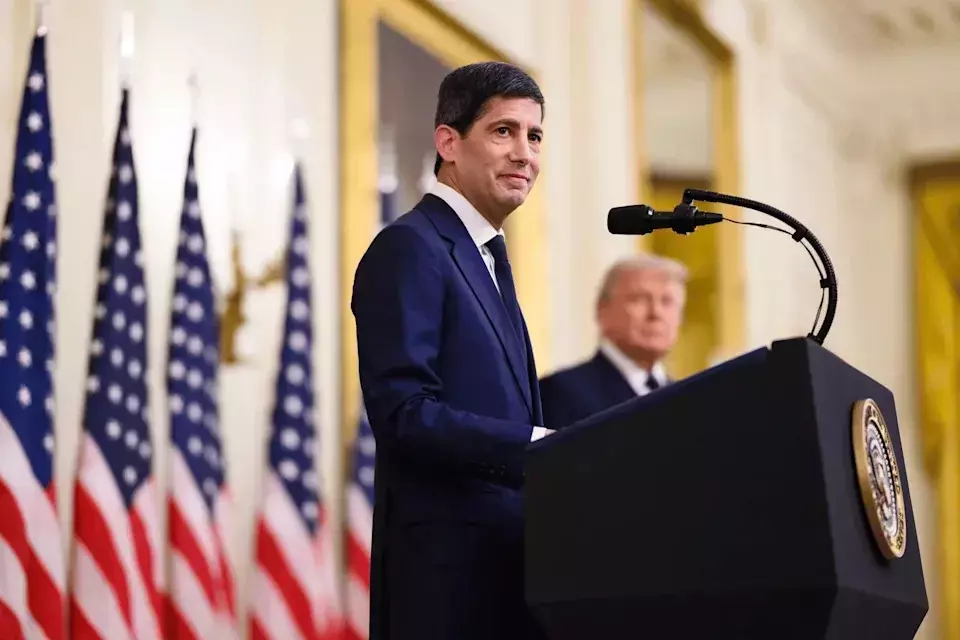
In a recent discussion on Bloomberg, Neel Dutta, a strategist from Renaissance Macro Research, presented a compelling argument for the Federal Reserve to raise interest rates in July 2026. This proposal comes after a period where the Fed maintained its target rate at 3.75% since December 2025, following earlier reductions from a peak of 4.5% in September 2025. Dutta’s analysis suggests that Fed Chairman Kevin Warsh faces a limited opportunity to exert control over monetary policy before external factors and internal committee dynamics become more challenging.
Dutta’s tactical reasoning for an immediate hike centers on the expectation of unfavorable inflation data in the coming months. He highlighted that despite a recent period of more stable inflation, rising oil prices, escalating capital expenditures in the AI sector, and the potential impact of tariffs could soon drive inflation upward. Specifically, WTI crude oil reached $84.38 per barrel by July 20, 2026, marking a 5.0% increase over the preceding month, and the Core PCE, the Fed’s preferred inflation metric, has shown a consistent monthly rise, hitting 130.08 in May 2026. The 10-year Treasury yield, which climbed to 4.71% by July 23, 2026, further indicates that bond markets are anticipating a policy adjustment.
Beyond economic data, Dutta underscored the importance of committee cohesion. He posited that Warsh could likely secure agreement for a rate hike in July, but this consensus might erode by September. The Federal Reserve’s committee exhibits a fragile split, with some officials, like Beth Hammack and Lori Logan, strongly advocating for hikes, while others, such as Philip Jefferson and Lisa Cook, appear more hesitant. Furthermore, Dutta noted the political dimension, suggesting that a rate hike in July might be tolerated by the President, who may be preoccupied with other pressing matters. However, as the midterm elections draw nearer in September and October, the political tolerance for such a move could diminish.
Dutta characterized the current economic environment as 'bifurcated,' with robust growth in AI-related capital expenditures overshadowing weaknesses in other sectors. Data from the Bureau of Economic Analysis (BEA) supports this view, showing a 1.5% growth in the information sector during Q1 2026, contrasted with modest gains of 1.0% in construction and 1.1% in real estate. Consumer financial health also shows signs of strain, with the personal savings rate dropping from 6.2% in Q1 2024 to 3.9% in Q1 2026, and consumer sentiment, as measured by the University of Michigan, languishing at 44.8, a level typically associated with recessionary conditions.
For the investment community, Dutta's perspective implies a higher probability of a July rate increase, which would likely impact rate-sensitive industries and equities that have been valued on assumptions of continued policy easing. This outlook contrasts sharply with forecasts from institutions like Goldman Sachs Research, which had predicted further rate cuts in 2026. Therefore, investors are advised to carefully consider both the possibility of an immediate rate hike and the potential for a more complicated policy environment in the autumn as the FOMC prepares for its upcoming decision.
