AI Boom's Financial Shift: Chipmakers Thrive as Big Tech Invests Heavily
Money

AI Boom's Financial Shift: Chipmakers Thrive as Big Tech Invests Heavily

authorBy Scott Pape
DateJul 11, 2026
Read Time2 min

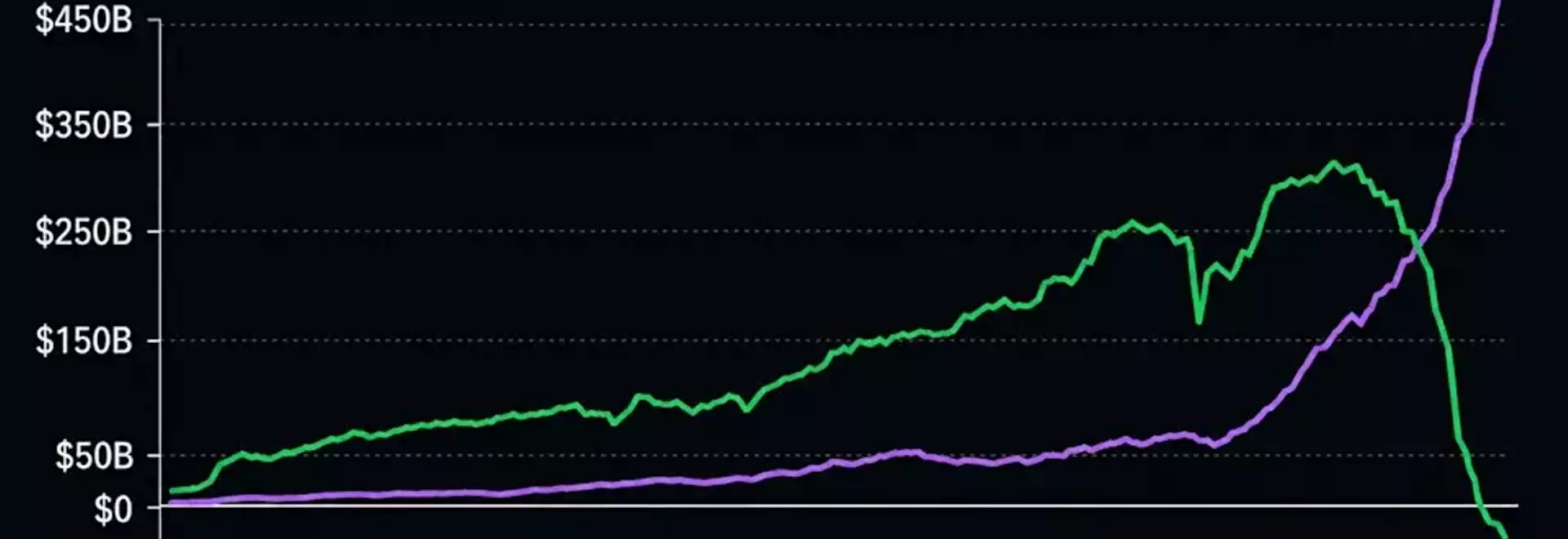
The burgeoning artificial intelligence sector is ushering in a significant financial realignment, primarily benefiting chip manufacturers. While major technology firms are channeling substantial investments into AI infrastructure, leading to a dip in their immediate free cash flow, the companies supplying the foundational hardware are experiencing a robust increase in theirs. This dynamic, characterized by Bank of America Global Research as a "generational transfer in free cash flow," underscores a critical shift in the economic landscape of the AI industry.

Hyperscale companies, including giants like Amazon, Google, Meta, Microsoft, and Oracle, are making considerable financial commitments to acquire chips, develop data centers, and secure necessary power resources. This heavy expenditure, totaling an estimated $234 billion this year from the "Magnificent Seven" hyperscalers, positions chipmakers as the initial beneficiaries. However, the long-term profitability for these tech leaders remains a subject of speculation. Apollo chief economist Torsten Sløk raises a pertinent question about the potential delay in realizing returns from these investments, a concern magnified by two key market pressures: declining token prices, which reduce per-use revenue for AI services, and the rapid advancement of Chinese AI models, intensifying competition for market share and high-margin revenues for American platforms.

The immediate challenge lies in the disparity between the timing of expenditures and revenue generation. The substantial costs associated with building AI infrastructure are immediate and ongoing, while the financial returns are anticipated to materialize over a longer horizon. Furthermore, the growing influence of Chinese AI models, as evidenced by their escalating token usage compared to US models, introduces an additional layer of complexity. If these trends continue, the optimistic projections for hyperscaler cash flows might need reevaluation. Despite these concerns, there remains an optimistic outlook: if AI adoption continues to expand, customers opt for more sophisticated tools, and tech companies successfully convert current investments into future revenue streams, the present cash flow strain could be viewed as a necessary precursor to establishing the next generation of technological platforms.

The evolution of the artificial intelligence landscape is a testament to technological progress and economic adaptation. It highlights the importance of strategic investment in foundational technologies and the need for a long-term perspective in navigating market shifts. As the AI sector matures, the ability to innovate and adapt to competitive dynamics will be crucial for sustained success and the realization of its full potential.

More Articles
Money
Honeywell Aerospace Inc. (HONA) Soars: Jim Cramer's Bullish Outlook
Jim Cramer expresses strong optimism for Honeywell Aerospace Inc. (HONA), a recent spin-off from Honeywell's aerospace division. He highlights the company's growth potential and its current undervaluation, despite some analysts setting 'Equal Weight' or 'Hold' ratings. Cramer's positive sentiment aligns with the market's enthusiasm for aerospace pure-plays like Boeing and GE Aerospace, suggesting HONA is poised for significant upside, drawing parallels to its industry peers' strong performance.
By Vicki RobinJul 11, 2026
Money
Jim Cramer's Persistent Concerns Over Blue Owl Capital Inc. (OWL)
Financial commentator Jim Cramer has expressed ongoing reservations regarding Blue Owl Capital Inc. (NYSE:OWL). Despite the asset manager's stock experiencing a significant downturn, Cramer's scrutiny intensified following reports of OWL's potential investment in a basketball team. UBS also maintained a 'Neutral' rating, citing private credit market weaknesses.
By Chika UwazieJul 11, 2026
Money
Jim Cramer Attributes NASDAQ Decline to SpaceX's Inclusion
Financial commentator Jim Cramer suggests that the recent NASDAQ stock market downturn was directly linked to the integration of Space Exploration Technologies Corp. (SPCX) into the NASDAQ 100 index. Following its IPO, SpaceX's stock has shown volatility, experiencing a 7% dip from its initial closing price, yet remaining above its listing price. Analysts from Susquehanna and Keybanc have offered cautious ratings, advising investors to seek opportune entry points due to the stock's already high valuation reflecting its strong potential in AI and rocket launches.
By Vicki RobinJul 11, 2026
Money
Retiring in Greece: A Practical Guide for Americans on a $2,800 Monthly Budget
This article explores the feasibility of retiring in Greece on a budget of $2,800 per month, highlighting that it's achievable in certain regions but not luxurious hotspots. It details the financial requirements, including a necessary investment portfolio of approximately $425,000 to $450,000, alongside early Social Security claims. The piece also covers crucial aspects like Greece's Financially Independent Person (FIP) visa requirements, the 7% flat tax on foreign income, and healthcare considerations for retirees aged 62 to 65, emphasizing careful planning for a successful Mediterranean retirement.
By Dave RamseyJul 11, 2026
Money
Suze Orman's Retirement Advice: Transforming a 'D-Minus' into an 'A' for Early Retirees
A 48-year-old single mother, Megan, aimed to retire at 55, inspired by her father's early death. Financial expert Suze Orman initially graded her retirement plan a 'D-minus' but offered a simple strategy to elevate it to an 'A'. This article explores the nuances of early retirement, the power of compound interest, and the significant financial advantages of working a few extra years, as highlighted by Orman's advice, to secure a more comfortable and sustainable post-career life.
By Scott PapeJul 11, 2026