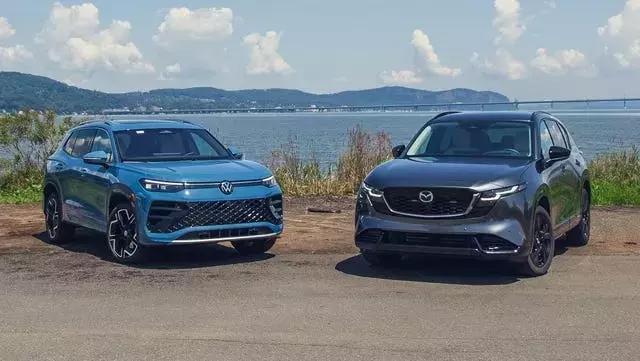
2026 Mazda CX-5 vs. 2026 Volkswagen Tiguan: A Compact SUV Showdown
In the highly competitive compact SUV market, the 2026 Mazda CX-5 and 2026 Volkswagen Tiguan emerge as compelling alternatives to the more ubiquitous models. These vehicles carve out their own niches by offering unique characteristics and engaging driving experiences that set them apart from the crowd. This comparison delves into the nuances of each model, examining their designs, powertrain options, performance metrics, and overall handling to determine which offers a more satisfying package for discerning drivers.
While both vehicles strive for practicality inherent to their class, they also aim to deliver a driving experience that transcends mere utility. The latest iterations, the third generations for both, introduce enhancements and changes that redefine their appeal. The Tiguan, making its debut for the 2025 model year, and the CX-5, slated for a 2026 release, invite a closer look to see if they maintain their enthusiast-friendly roots or if market demands have softened their distinctive edge.
Design and Interior Dynamics
The aesthetic appeal of a vehicle, even in the practical compact SUV segment, plays a significant role in consumer choice. Both the Mazda CX-5 and Volkswagen Tiguan distinguish themselves with designs that are arguably more attractive than many of their contemporaries. The updated CX-5 retains its refined proportions and sophisticated detailing, making it appear more upscale than its price point suggests. Its refreshed lighting elements contribute to a modern yet familiar presence. The Tiguan, on the other hand, embraces a more fluid silhouette, accentuated by its dynamic LED lighting, which prevents it from blending into the generic SUV landscape. Both brands have successfully crafted vehicles that exude a premium feel, enhancing their curb appeal.
Inside, the cabins of both SUVs are dominated by large touchscreen infotainment systems, a trend indicative of modern automotive design. The Mazda boasts a 15.6-inch display, while the Volkswagen features a 15.0-inch screen in its top-tier R-Line Turbo trim. While these integrated systems centralize many functions, they can sometimes complicate basic operations, such as climate control, which rely on on-screen interactions rather than traditional physical controls. Despite this shared characteristic, the Tiguan's infotainment system is noted for its slightly more intuitive layout and quicker responsiveness. Furthermore, the Volkswagen's interior benefits from superior material quality and a more thoughtfully designed dashboard, incorporating elegant wood-like accents and metallic trim, which gives it a distinct advantage over the CX-5, especially given the latter's perceived downgrade in certain interior finishes compared to its predecessor.
Powertrain and Driving Performance
When it comes to power and acceleration, the Volkswagen Tiguan, particularly in its R-Line Turbo configuration, demonstrates a clear advantage. Equipped with a 268-horsepower turbocharged 2.0-liter four-cylinder engine, it stands out as one of the most potent options in its class. This enhanced power translates into a brisk 6.7-second sprint to 60 mph, offering impressive torque and immediate throttle response characteristic of modern turbocharged engines. In contrast, the 2026 Mazda CX-5, now exclusively featuring a 187-horsepower naturally aspirated 2.5-liter inline-four (with a hybrid option planned for the future), requires higher revs to achieve adequate passing power, despite its capable 8.0-second 0-60 mph acceleration. While the CX-5's six-speed automatic transmission is responsive, the absence of a more powerful engine option somewhat diminishes its competitive edge against the Tiguan's performance-oriented trims.
The driving experience in both SUVs caters to those who seek more than just basic transportation, though their approaches differ. The latest CX-5 has adopted a softer suspension setup, leading to a more composed and comfortable ride that skillfully absorbs road imperfections. While this provides a pleasant journey, it also results in more noticeable body roll during cornering. The Tiguan, especially in its sportiest variant, offers a firmer ride due to its stiffer suspension and larger wheels, which might be less forgiving on rougher surfaces but contributes to its sharper handling. With precise and responsive steering, the Tiguan excels on winding roads, cornering with minimal body lean. Although the CX-5 demonstrated slightly more grip in skidpad tests (0.83 g vs. Tiguan's 0.80 g), the Tiguan's overall agility and more engaging dynamics, particularly in the R-Line Turbo, make it the more spirited choice for driving enthusiasts.
