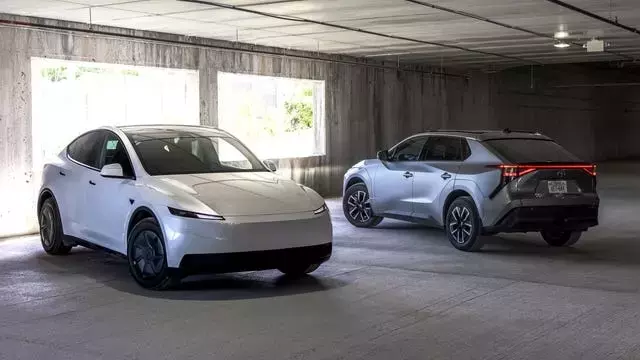
2026 Electric SUV Showdown: Tesla Model Y vs. Toyota bZ
Unveiling the Future: Who Drives Ahead in the Electric SUV Race?
The Evolving EV Landscape: Tesla's Blueprint and Toyota's Resurgence
For years, Tesla has been the pacesetter in the electric vehicle industry, with its Model Y setting a high bar for mainstream adoption. In contrast, Toyota initially lagged, introducing the bZ4X, a co-developed venture that garnered mixed reviews. However, the Japanese giant has significantly refined its offering, transforming it into the more competitive Toyota bZ. This renewed contender has surprisingly surpassed many non-Tesla EVs in sales, though the Model Y maintains its lead. Both manufacturers cater to a market segment seeking electric SUVs priced under $45,000, presenting a fascinating rivalry built on distinct philosophical approaches.
Pricing and Feature Enhancements: A Closer Look at the Latest Iterations
The 2026 Model Y has undergone a substantial redesign, introducing a new base rear-wheel-drive variant starting at an attractive $41,630. While certain aesthetic upgrades, like Pearl White paint, come with additional costs, Tesla's enhanced Full-Self Driving (Supervised) feature is now offered as a more accessible monthly subscription. Toyota's bZ, formerly the bZ4X, also received significant updates. Beyond cosmetic changes and an improved dashboard, it boasts upgraded electric motors, new battery configurations, and compatibility with Tesla's Supercharger network via the NACS port. The bZ XLE, with a starting price of $36,495, remains a budget-friendly option, with the XLE Plus offering extended range and power for a modest premium.
Design Philosophy: From Anonymous Efficiency to Subtle Sophistication
Both manufacturers have opted for fresh aesthetics for their 2026 models. The base Model Y diverges from its more upscale siblings by omitting certain aggressive design elements, leaning towards a more understated look. Its standard 18-inch steel wheels, while efficient, contribute to a somewhat generic appearance. Upgrading to larger alloy wheels incurs an additional cost and slightly reduces range. The Toyota bZ, on the other hand, presents a more distinct, albeit still conservative, exterior. Its signature "hammerhead" lighting and sculpted body lines give it a bit more character than its predecessor.
Inside the Cabin: Ergonomics and Infotainment Innovations
The interior of the Toyota bZ surpasses expectations for an entry-level vehicle. Despite a monochromatic color scheme and a blend of soft-touch and hard plastics, the synthetic-leather seats with fabric inserts offer a touch of Scandinavian elegance. Toyota has significantly improved the cabin's ergonomics, redesigning the center console to accommodate dual wireless charging pads and easily accessible cup holders. A larger 14.0-inch infotainment touchscreen, now featuring physical knobs and standard wireless Android Auto and Apple CarPlay, provides a more user-friendly experience than Tesla's offerings. However, the bZ's driving position, with its low-mounted steering wheel and high-mounted gauge cluster, still requires some adjustment. Additionally, the vehicle's persistent warning chimes can be a point of contention for some drivers.
Tesla's Minimalist Interior: A Balance of Simplicity and Advanced Tech
The Model Y's interior offers a starkly different experience, emphasizing minimalism and technological integration. Following updates to the Model 3, the Model Y benefits from improved materials and enhanced sound insulation. However, base models feature manual steering column adjustments and rear seat folding, alongside the absence of ventilated front seats and heated rear seats. The large 15.4-inch center touchscreen serves as the primary control interface, housing intuitive menus and seamless integration with popular apps like Spotify and YouTube. While lacking traditional physical controls and phone mirroring, the Model Y's user interface is considered among the best in the industry. Minor drawbacks include a limited number of USB-C ports and a single 12-volt outlet in the cargo area.
Power and Performance: A Head-to-Head Battle on the Road
Both electric SUVs are equipped with a single electric motor. The front-axle-driven Toyota bZ XLE Plus, with its 67-kWh battery (estimated), produces 221 horsepower. The rear-wheel-drive Model Y, powered by a slightly larger 70-kWh battery, delivers a more robust 300 horsepower. In performance tests, the Model Y accelerated to 60 mph in 5.9 seconds, a noticeable 0.3 seconds faster than the bZ. The Tesla also demonstrated superior passing power, lateral grip (0.86 g vs. 0.82 g), and shorter braking distances. In terms of range, the Model Y maintains a slight advantage with an EPA-estimated 321 miles, compared to the bZ's 314 miles, though real-world testing showed comparable highway range. The bZ does, however, boast a faster DC fast-charging time, needing 35 minutes to reach 90% charge compared to the Model Y's 44 minutes.
Driving Dynamics: Nimble Agility Versus Familiar Comfort
The Model Y offers a dynamic and responsive driving experience, characterized by quick, direct steering that makes it feel agile in urban environments and adept at highway maneuvers. Its regenerative braking system is well-calibrated for smooth one-pedal driving, though the absence of a full-disable option is a minor point. The base model's ride can be a bit firm and noisy, a consequence of cost-saving measures. Tesla's Full-Self Driving (Supervised) system stands out as a leading Level 2 autonomous driving solution, offering remarkably natural and effective assistance, particularly in managing traffic flow.
Toyota's Driving Experience: Predictable and Plush
The driving experience in the bZ mirrors that of many other Toyota and Subaru SUVs, offering a sense of familiarity that may appeal to drivers transitioning from traditional gasoline vehicles. While not exhilarating in terms of speed, and featuring steering that lacks significant feedback, its comfortable and composed demeanor makes it an ideal daily commuter. The bZ's ample tire sidewall and soft damping contribute to a plush ride quality, reminiscent of Lexus vehicles. Paddle shifters allow for adjustable regenerative braking, though a true one-pedal driving mode is not available.
The Verdict: Tesla's Innovation or Toyota's Value?
Toyota deserves commendation for the substantial improvements made to the bZ, transforming it into a much more competitive electric SUV. Its affordability and enhanced features make it a strong option for first-time EV buyers seeking a familiar driving experience or those who prefer alternatives to the Tesla brand. However, for consumers seeking an entry-level EV from a company known for challenging industry norms and prioritizing advanced technology, the Tesla Model Y RWD remains the superior choice. Despite its minimalist aesthetic, the Model Y's strong range, engaging driving dynamics, and industry-leading Level 2 autonomous driving system solidify its position as the world's best-selling electric vehicle. Between the two, the Tesla Model Y emerges as the more compelling option for a broader range of electric SUV buyers.
